
France
18th century French drawings

Antoine Duparc (1675-1755), design for the altar of the Chapel of Notre-Dame d’Espérance, Aix en Provence, c.1737, s & d, pen-&-ink, wash, 50 x 31.2 cm., Département des Arts graphiques, Musée du Louvre
‘Study for the polychrome marble altarpiece in the nave of [chapel of] Notre-Dame-de-l’Espérance in the Cathedral of St Sauveur, Aix-en-Provence’.
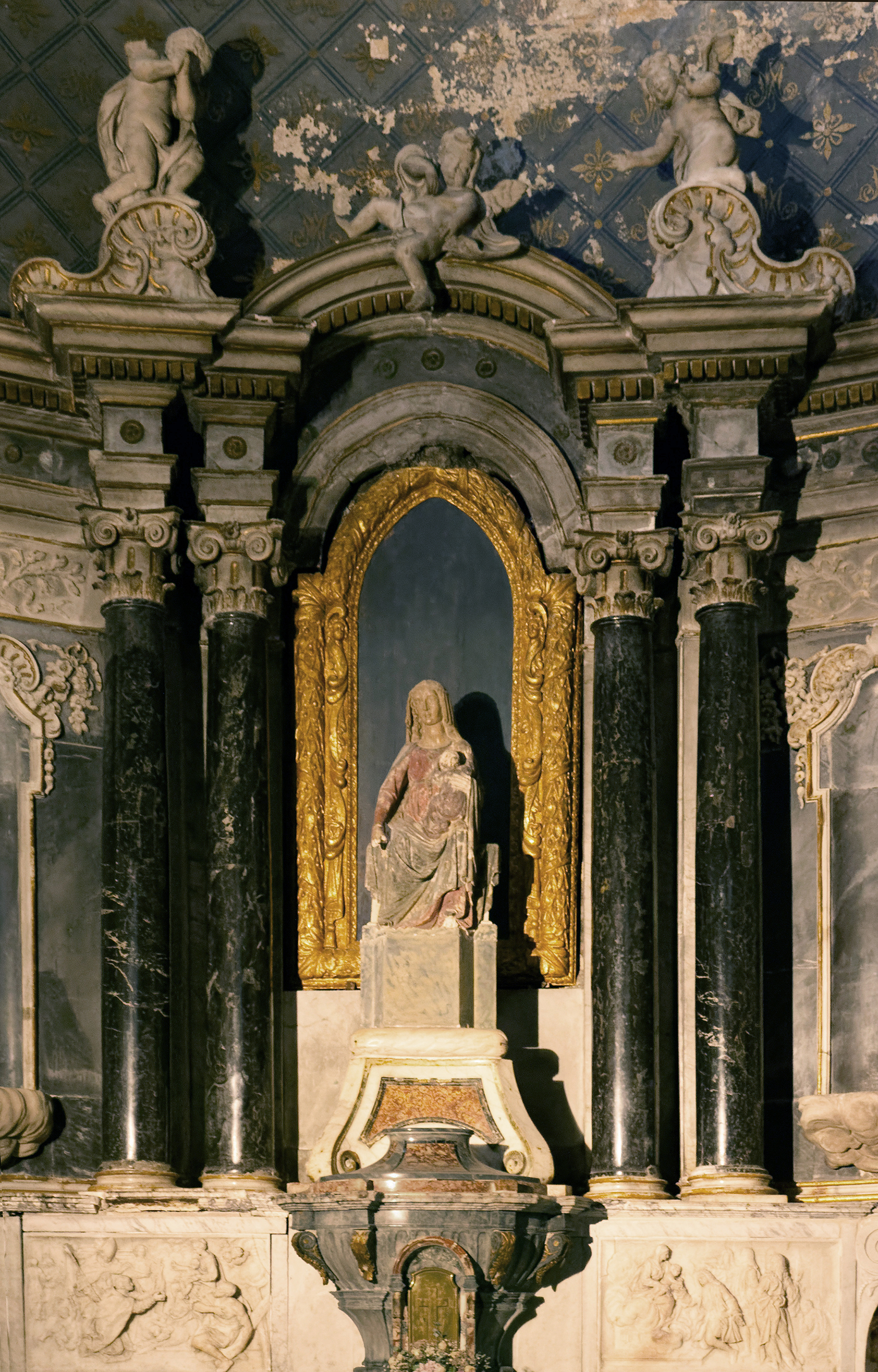
Antoine Duparc, the altar of the Chapel of Notre-Dame d’Espérance, as it is today
The altar was either not completed entirely to Duparc’s design, or it has lost the baldaquin, glory and lateral statues to dilapidation or the Revolution. The shaped altar is still in place, beneath the urn-shaped reservoir for the Eucharist.

Juste-Aurèle Meissonnier (1695-1750), design for an altarpiece in the church of St Aignan d’Orléans, page of an album (plate 102), etching, 57.7 x 42 cm., Département des Arts graphiques, Musée du Louvre

Antoine Herisset (c.1685-1769), design for an altar to St Leu of Paris, etching after Juste-Aurèle Meissonnier (1695-1750), page of an album (plate 103), 57.7 x 42 cm., Département des Arts graphiques, Musée du Louvre

Antoine Herisset (c.1685-1769), design for an altar to St Leu of Paris, etching after Juste-Aurèle Meissonnier (1695-1750), page of an album (plate 104), 57.7 x 42 cm., Département des Arts graphiques, Musée du Louvre
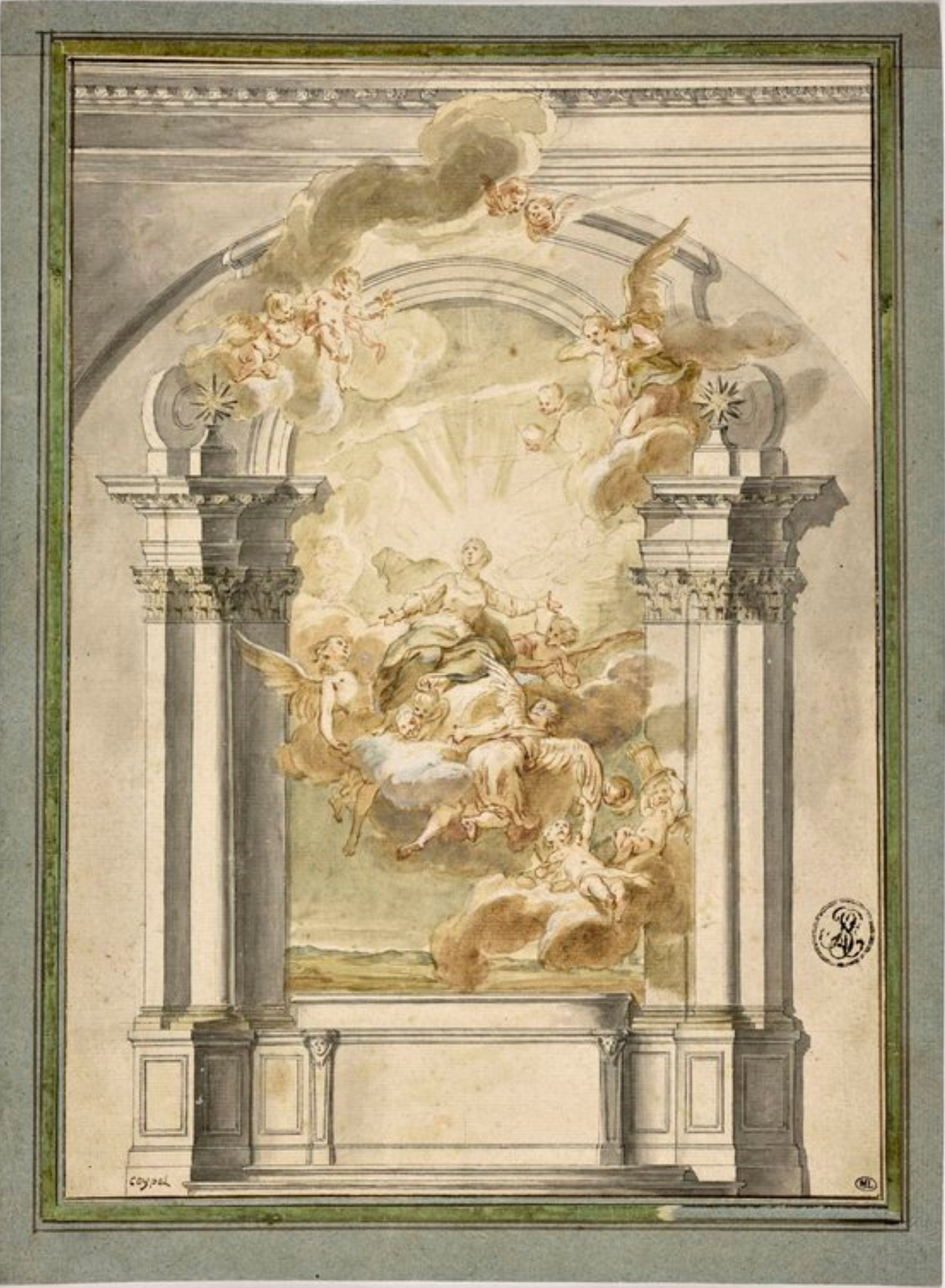
Coypel (? Noël-Nicolas, 1690-1734), design for altarpiece with The assumption of the Virgin, for the Chapel of the Virgin, St Sauveur, Paris, c. 1731, black chalk, sanguine, wash, white heightening, 31.2 x 22.2 cm., Département des Arts graphiques, Musée du Louvre
‘Study for the altarpiece in the Chapel of the Virgin, church of St Sauveur, Paris, by Noël-Nicolas Coypel. The altarpiece responded to the illusionist painted decoration of the chapel, the two schemes being linked by the ray of light emanating from the dove of the Holy Spirit’.

Carle (Charles-André) Vanloo (1705-65), The Mass of St Gregory (a series of six), 1762-65, pen-&-ink, wash, heightened with white, 19.7 x 13.9 cm., Metropolitan Museum, New York
‘Carle Vanloo received the prestigious commission for the vault of the church of Saint-Louis des Invalides in 1762. The chapel was initially decorated by Michel Corneille (1642-1708) with paintings of the same subject; however, by the mid-18th century the panels were heavily damaged… …Vanloo was certainly familiar with Corneille’s paintings, for they were engraved by Charles Nicolas Cochin the Elder (1686-1754) in 1736. Futhermore, Vanloo cut his sheets and pasted them on top of Cochin’s engravings so that they would serve as sculptural frames to his own compositions.’
The project was ended by Vanloo’s sudden death. See also The clergy of Rome paying homage to St Gregory; St Gregory distributing his worldly goods to the poor ; St Gregory as a deacon; St Gregory reluctant; St Gregory dictating his homilies‘.
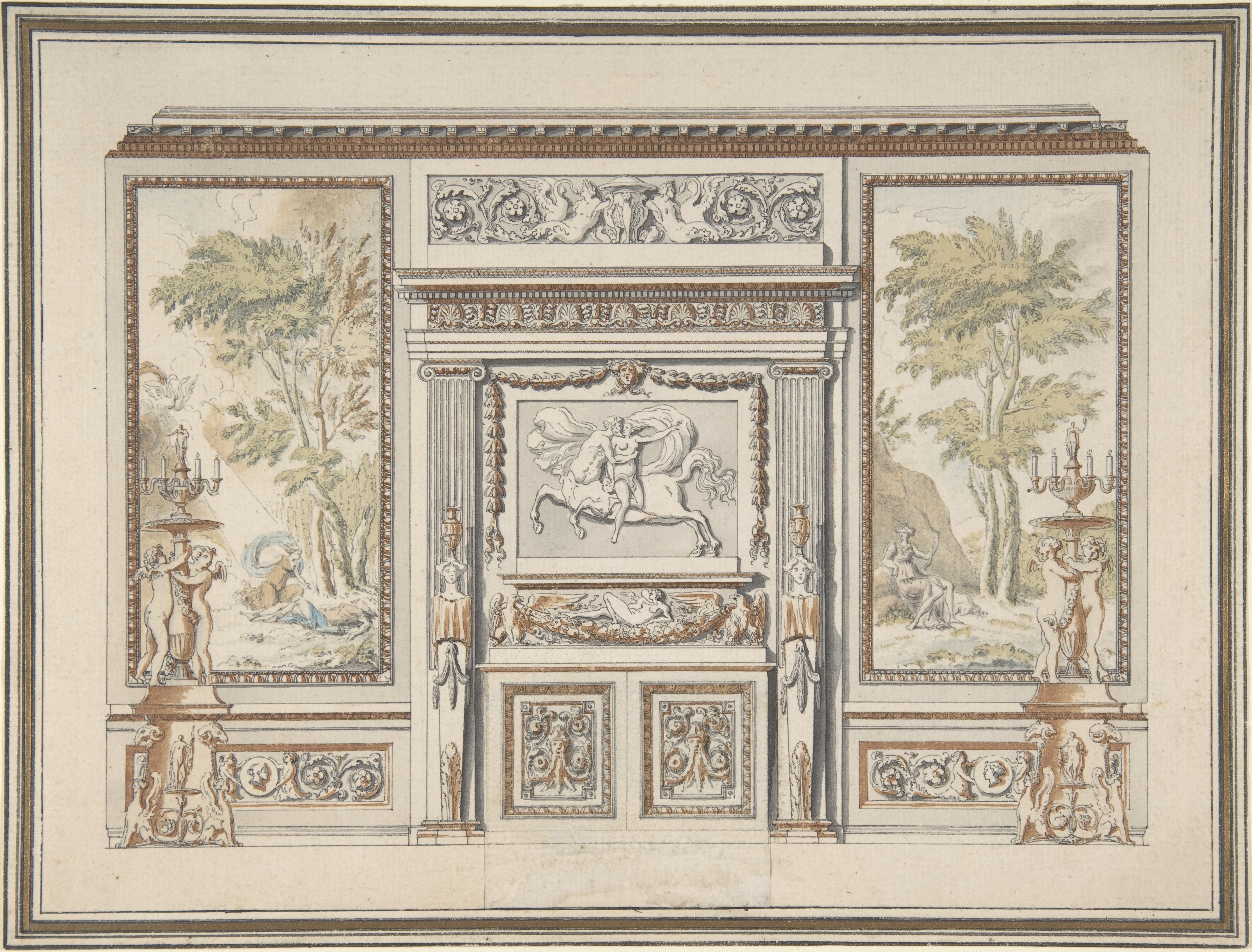
Etienne de Lavallée-Poussin (1733–93), design for a wall elevation, c.1770-80, pen-&-ink, pencil, watercolour, 19.7 x 26.1 cm., Metropolitan Museum, New York
‘The overall scheme of this design – a chimneypiece in the centre, combined with painted wall panels and torchères – goes back to 17th century French examples, but the individual parts are all attuned to the latest taste for NeoClassical design. …severe architectural elements [are combined] with a light sculptural relief and playful decorations to form a very original scheme…
…The partially applied washes indicate that many elements were to be gilded. The artist also added an alternate view for the fireplace, with the hearth opened up; a detail which has unfortunately been lost, but can be deduced from the abraded strip on the bottom of the sheet where the addition was originally attached.’

Jean Louis Prieur II (attrib.; 1759-95), design for a frame for a portrait or cameo with four alternate options for the corners, last quarter 18th century, pen-&-ink, wash, 18.6 x 14.5 cm., Rijksmuseum

Anon., French school, design for the corner of a frame with rocailles, c.1735-50, pencil, pen-&-ink, wash, 7.4 x 12.5 cm., Rijksmuseum

Anon., French school, formerly attrib. Victor Louis (1731-1800), design for a canopied bed in an alcove, c.1770-90, pen-&-ink, wash, 38 x 51.9 cm., Metropolitan Museum, New York
‘It is unknown for whom this stately bedroom was originally designed, but the nude sleeping figures in the friezes and the cupids adorning the bed introduce a slightly erotic theme which indicates that it may have been intended for a newly-wedded couple. In the past, the design has been tentatively attributed to various well-known French architects and designers, such as Victor Louis (1731-1800), François-Joseph Bélanger (1744-1818) and Louis Gustave Taraval (1738-1794).’
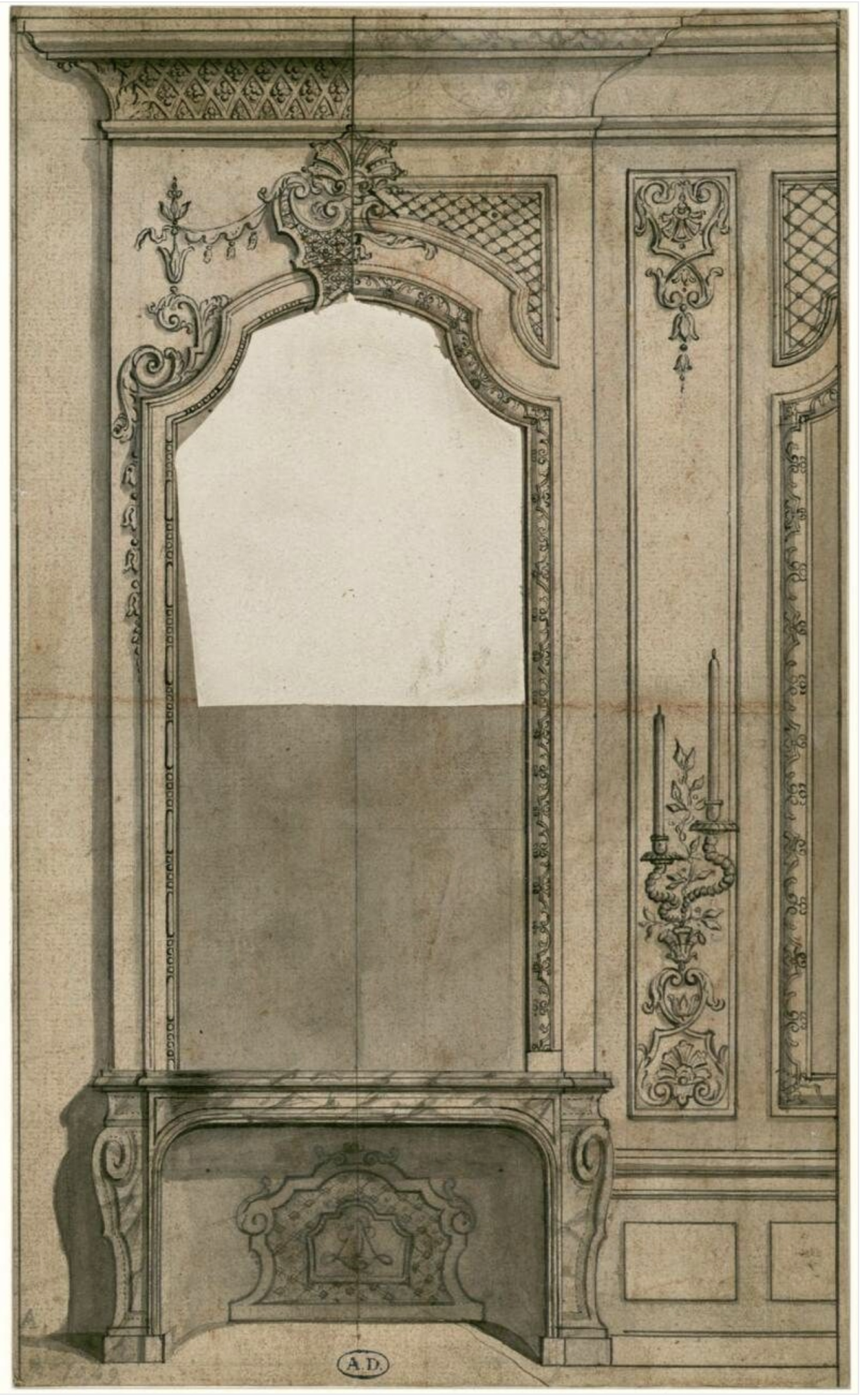
Anon., French school, design for a chimney and overmantel, 18th century, pencil, sanguine, ink, watercolour, 25 x 15.5 cm., Musée des Arts décoratifs, Paris
 The Frame Blog