
Germany
16th century German drawings
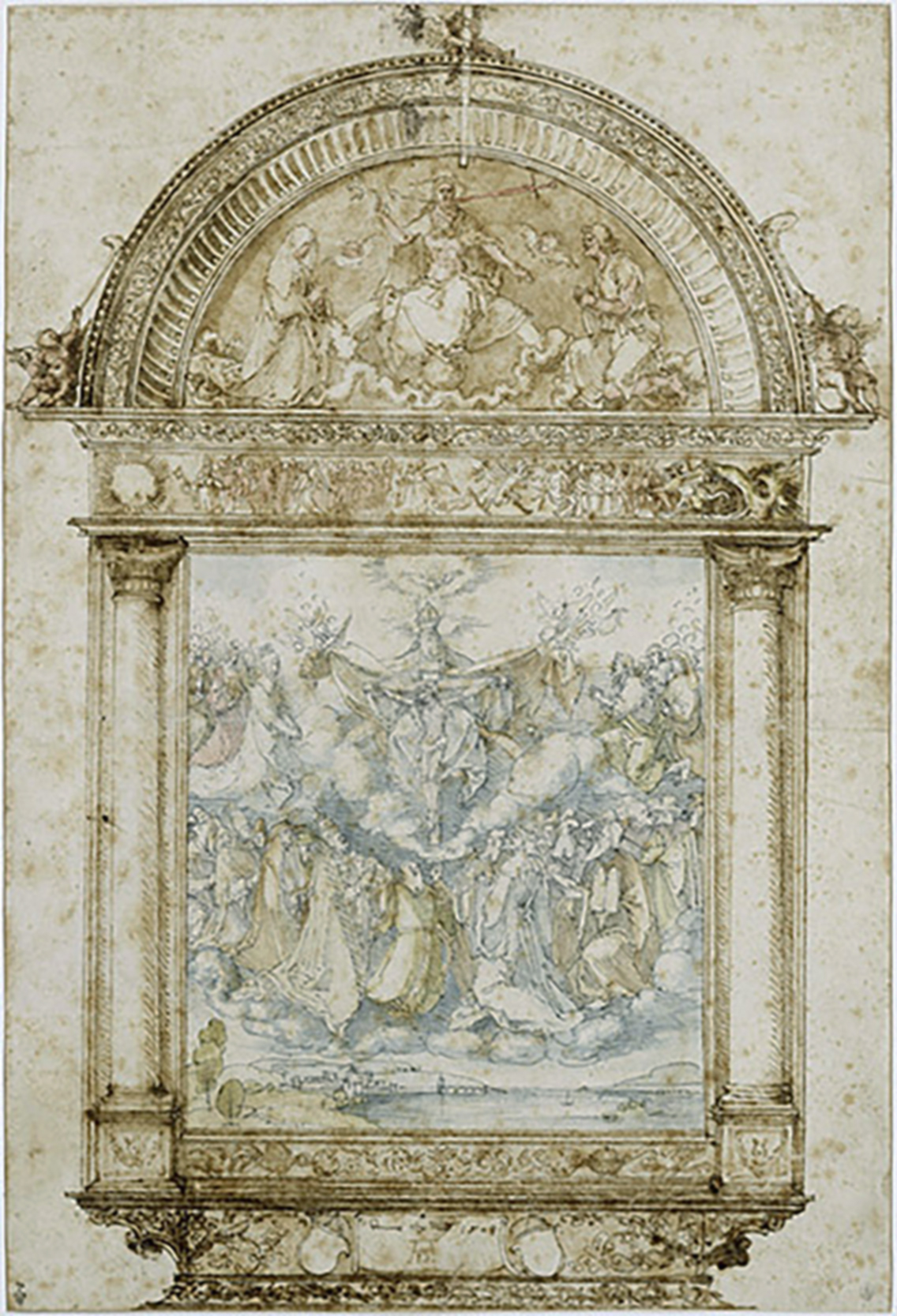
Albrecht Dürer (1471-1528), design for the Landauer Altarpiece, 1508, s & d, pen-&-ink and wash, 39 x 26.5 cm., Musée Condé, Chantilly, OF887
This is Dürer’s drawing for his Allerheiligenbild (All Saints’ altarpiece), an extraordinary explosion of colour – centred on the crucified figure of Christ and God the Father – forming an oval which reflects the curving pediment of the frame. The painting is sadly now in the Kunsthistorisches Museum in Vienna in a replica 1880s frame, whilst the real frame is in the Germanisches Nationalmuseum in Nuremberg; successive restorations have rendered it slightly too small ever to contain the painting again. This early drawing for the whole is in the Musée Condé, in which it’s evident that much of the frame was already in place in concept, before the painted composition had been settled.

Dürer, the original Allerheiligenbild frame, 1511, Germanisches Nationalmuseum, Nürnberg
In 1508 Dürer had been commissioned by Matthäus Landauer of Nuremberg to produce a chapel altarpiece for an almshouse he had endowed for twelve retired craftsmen. Frame and painting were finally completed in 1511, and can be seen in situ in a watercolour of 1836 by Georg Wilder (although the painting had already been sold to Rudolf II of Bohemia in 1585). The structure used the single panel Italian Renaissance quadro, innovatory for Germany, and a classicizing aedicule as a frame – although the final version retained a lacy overlay of Gothic foliate branches. The carver and gilder is unknown, but the workmanship is astonishingly vivid and complex; the tympanum holds a relief of Christ in Judgement, with two supporting angels blowing the last trump; the columns and predella are wreathed in Eucharistic grapevines, and the frieze holds a classical procession of judgement: on the left, the Blessed are received into heaven (the great sunburst); on the right, the damned are herded into the mouth of Hell; in the centre a demon fights for a questionable soul. See this as an illustrated post.

Lucas Cranach the elder (1472-1553), design for a wall, with two angels holding candlestands and a sleeping soldier, c.1509-10, pen-&-ink, wash, 14.8 x 15.8 cm., Kupferstichkabinett, Staatliche Museen zu Berlin
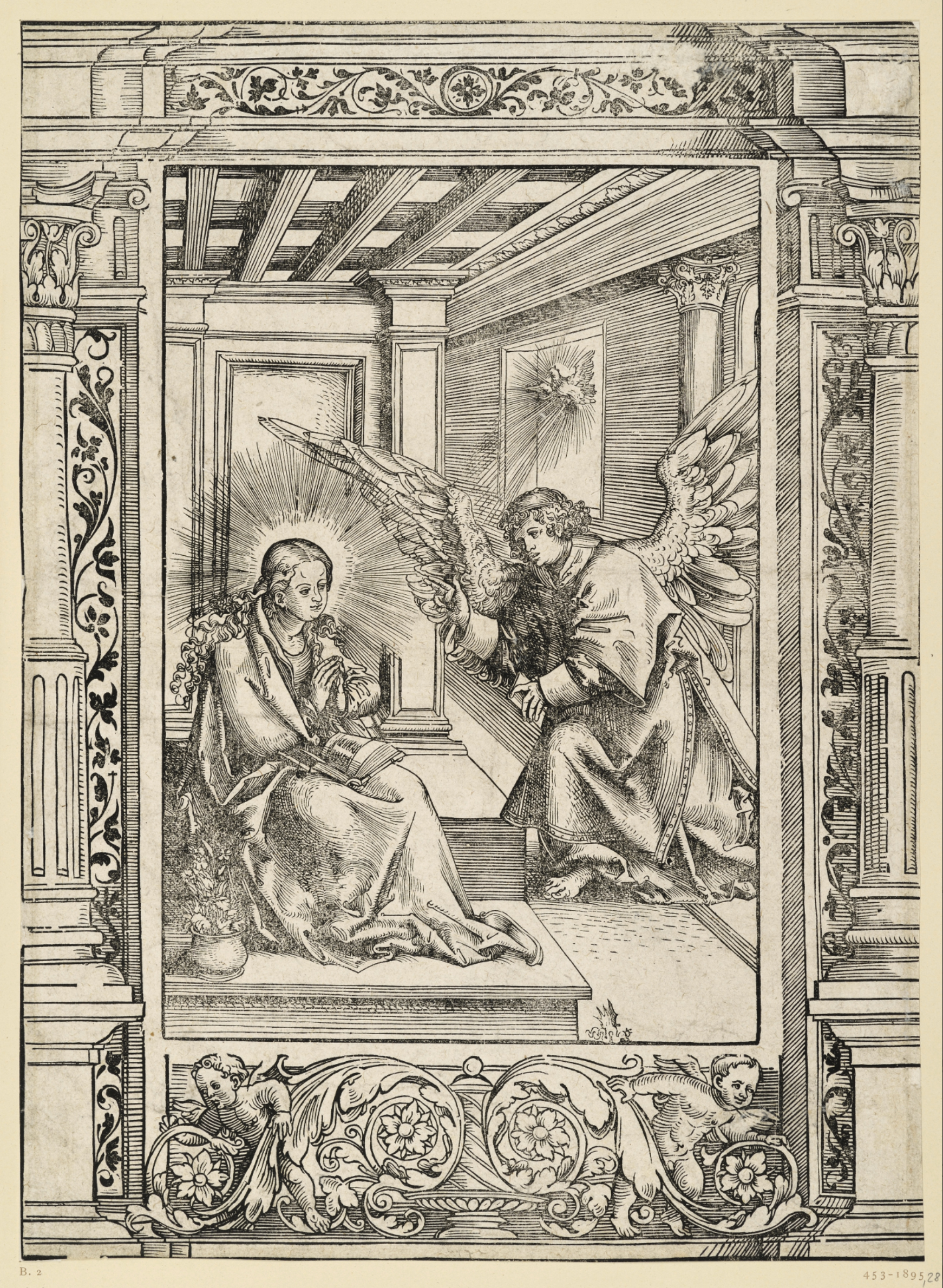
Lucas Cranach the elder (1472-1553), The Annunciation, 1511, woodcut, 34.8 x 25.3 cm., Kupferstichkabinett, Staatliche Museen zu Berlin

Lucas Cranach the elder (1472-1553), Crucifixion with a pair of donors, 1530, pen-&-ink, traces of black & red chalk, 20.3 x 14.4 cm., Kupferstichkabinett, Herzog Anton Ulrich Museum, Braunschweig
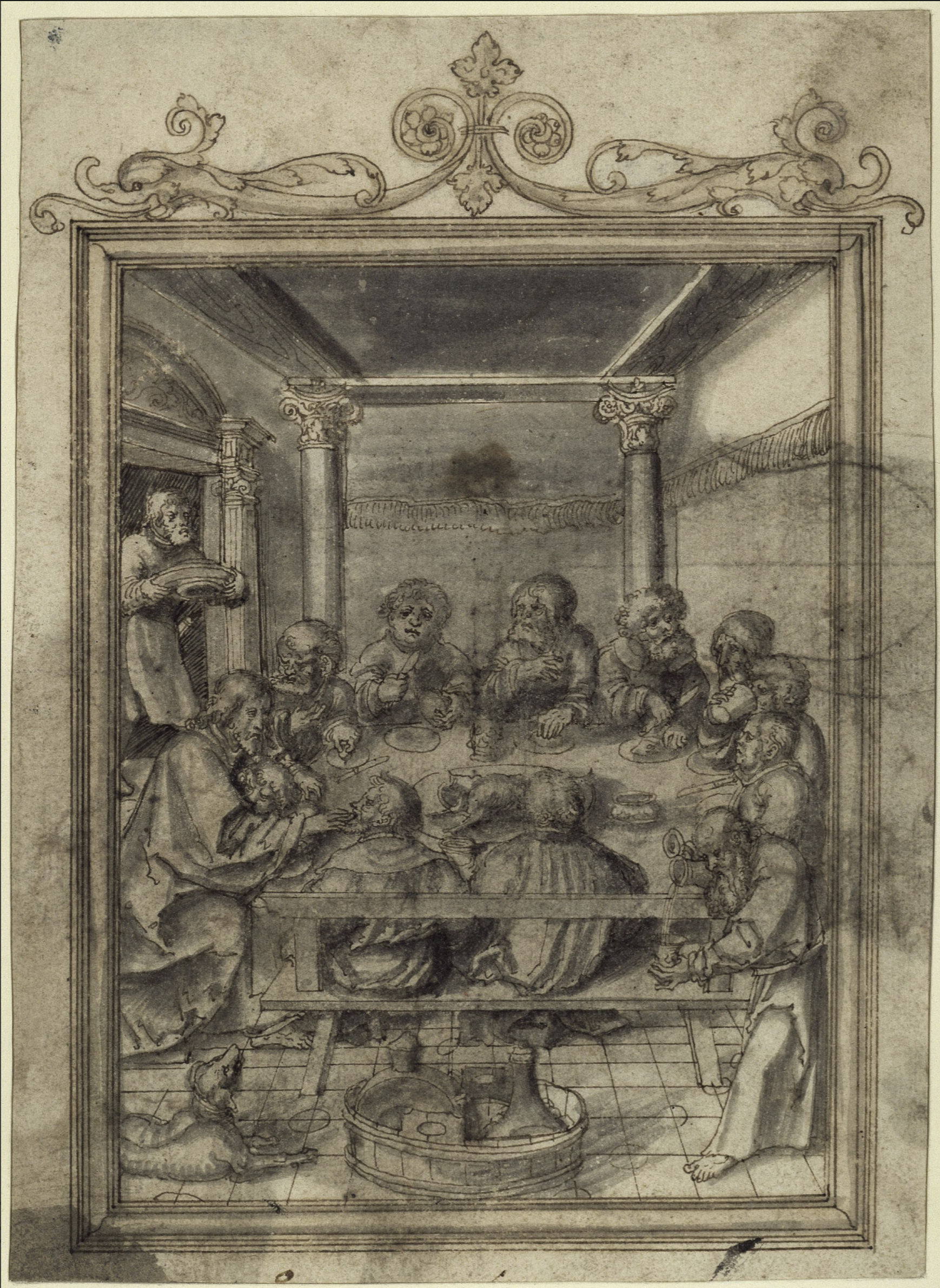
Lucas Cranach the elder (1472-1553), drawing of The Last Supper, c.1535, pen-&-ink, wash, 18.8 x 13.6 cm., Kupferstichkabinett, Staatliche Museen zu Berlin
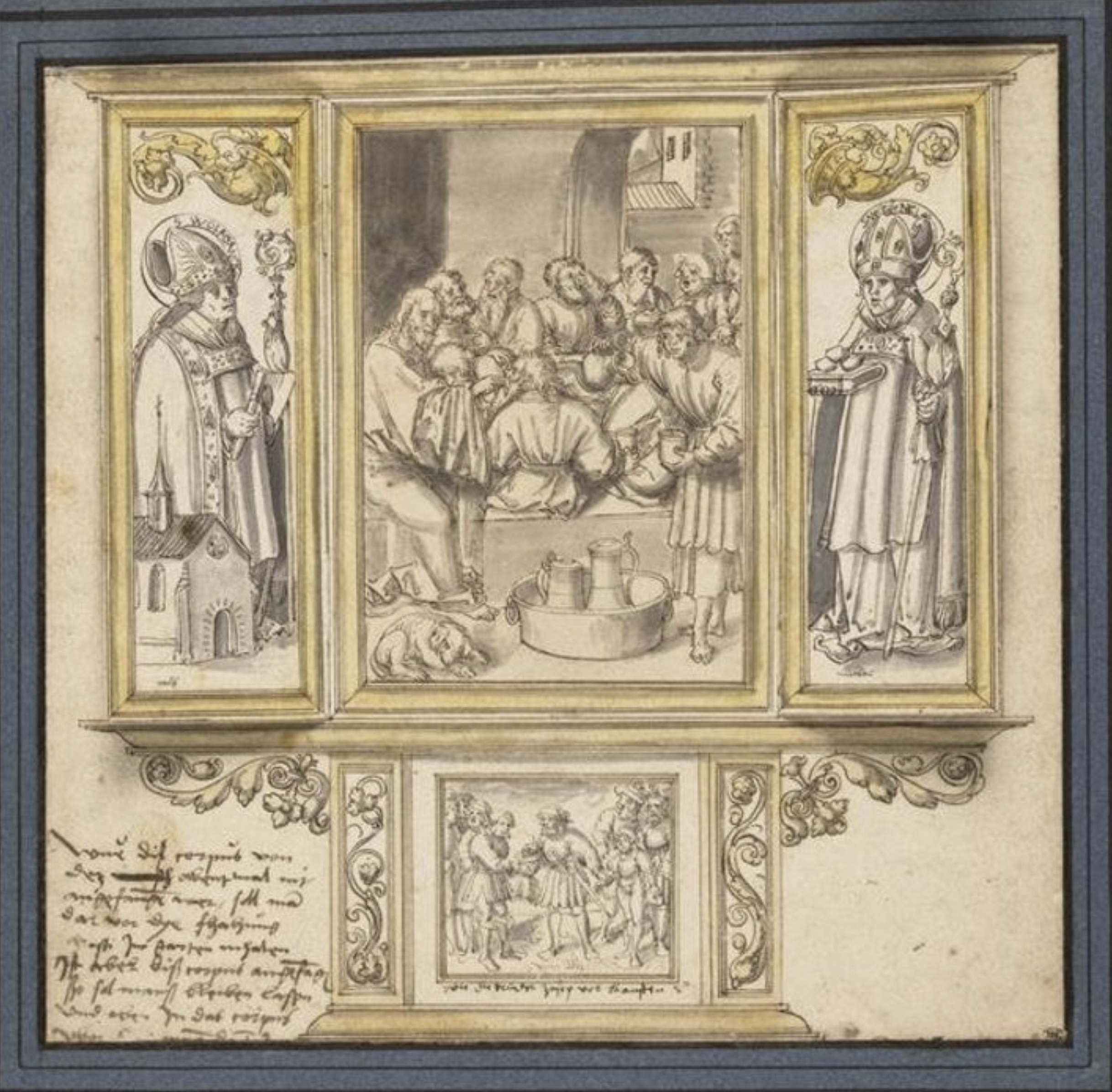

Lucas Cranach the elder (1472-1553), design for a triptych with two shutters, with The Last Supper on the main panel, pen-&-ink, wash, 24.4 x 25.3 cm., Département des Arts graphiques, Musée du Louvre
‘…Open, in the centre: The Last Supper, the apostles are arranged as in the Book of Hours of Etienne Chevalier. Left panel: St Wolfgang, as bishop. Right panel: St Nicholas of Bari.
Closed, in the centre: Pope Sixtus and St Steczcejan (St Stanilas?). On the right and left, two other bishops. On the predella: Joseph sold by his brothers’.

Anon. draughtsman (after Cranach the elder; 1472-1553), Christ before Pilate, pencil, pen-&-ink, wash, 26.8 x 20.2 cm., Kupferstichkabinett, Herzog Anton Ulrich Museum, Braunschweig

Albrecht Altdorfer (c.1480-1538), The beautiful Madonna of Regensburg, c.1520, coloured woodcut, 35.6 x 25.1 cm., Kupferstichkabinett, Staatliche Museen zu Berlin
‘As part of the founding of the pilgrimage to the ‘Beautiful Madonna’ of Regensburg, Albrecht Altdorfer created a whole range of devotional prints of varying sophistication using copperplate engraving and woodcut techniques. This coloured woodcut was undoubtedly the most outstanding. It was printed in a particularly elaborate process in large editions, initially using six blocks (one line and five coloured blocks), later reduced to just four (one line and three coloured blocks).
[Text from: Albrecht Altdorfer (c.1480–1538), Drawings and Prints from the Kupferstichkabinett Gemäldegalerie; Kulturforum Potsdamer Platz, 22 November 2011-19 February 2012]’

Albrecht Altdorfer (c.1480-1538), Altarpiece with the beautiful Madonna of Regensburg and four saints, c.1520, woodcut, 31.1 x 24.1 cm., Kupferstichkabinett, Staatliche Museen zu Berlin
‘As a counterpart to the coloured woodcut of the ‘Beautiful Madonna’ of Regensburg, Altdorfer created this large, monochrome woodcut. It depicts an Italian altarpiece with the standing, full-length Madonna in the centre and four other saints in side niches.
[Text from: Albrecht Altdorfer (c.1480–1538), Drawings and Prints from the Kupferstichkabinett, as above]’
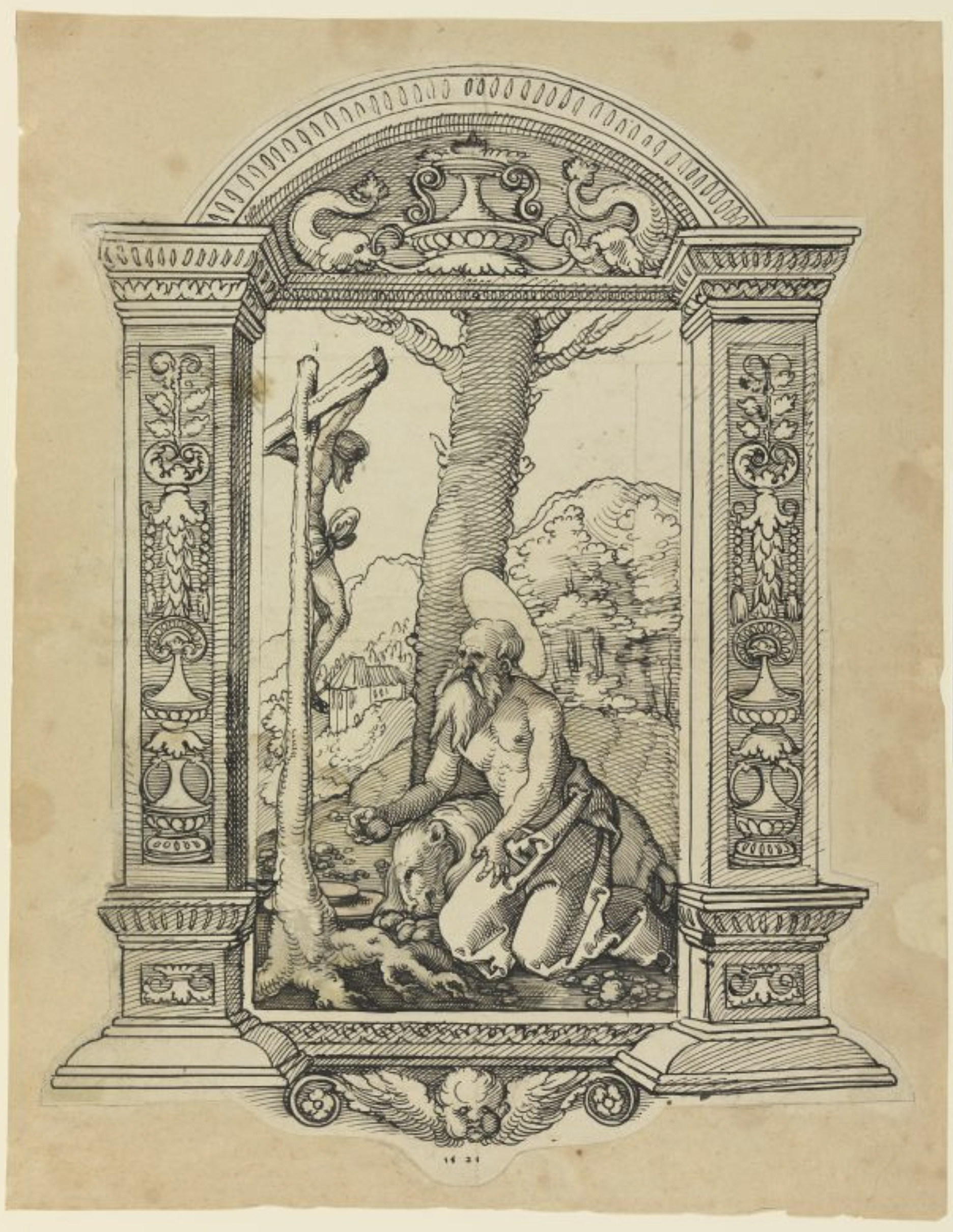
Sebald Beham (1500-50), St Jerome in a landscape, 1521, black chalk, pen-&ink, watercolour, 38.5 x 29.8 cm., Kupferstichkabinett, Herzog Anton Ulrich Museum, Braunschweig
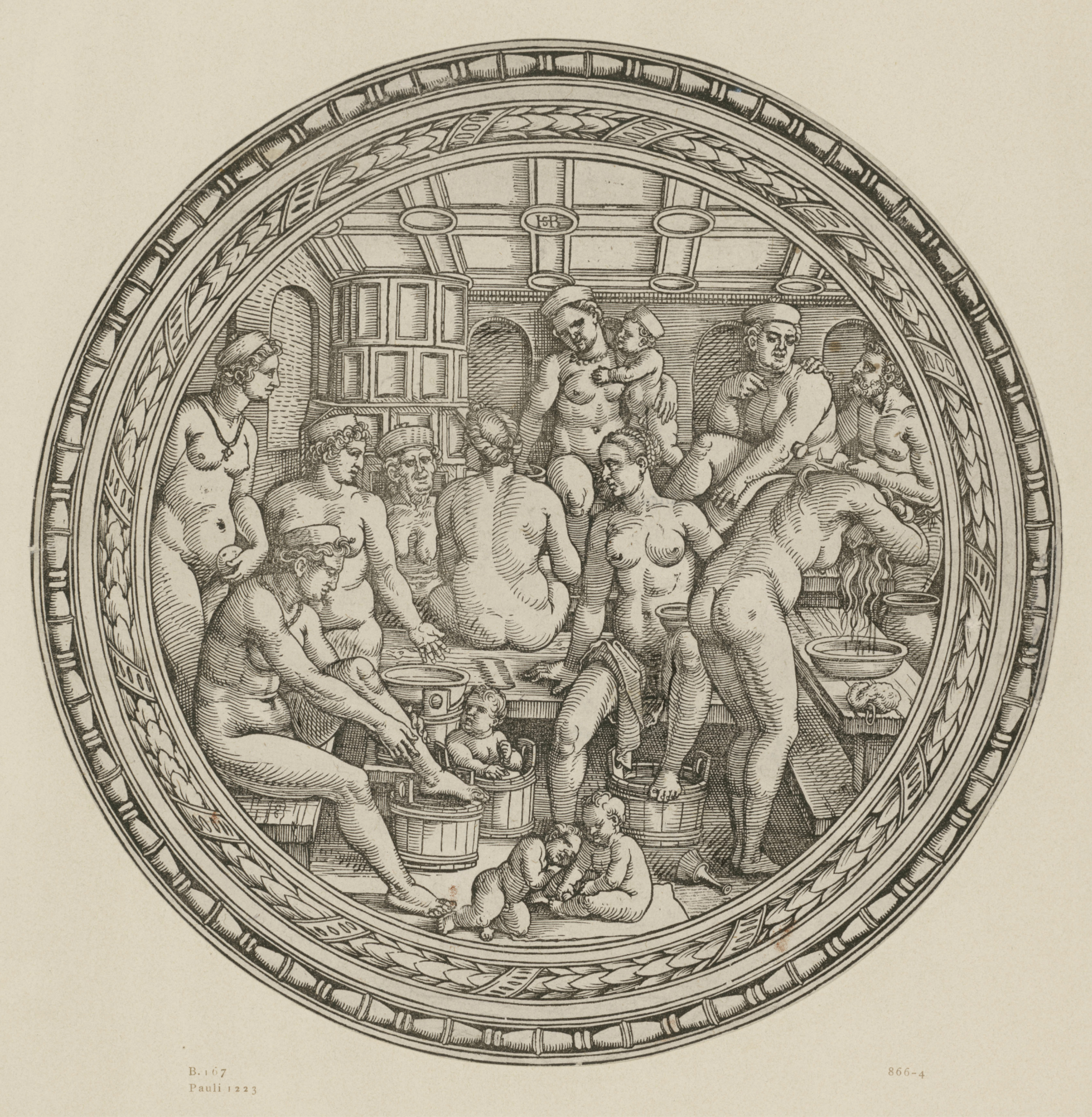
Sebald Beham (1500-50), The women’s bath, c.1540, woodcut overdrawn in black ink, in tondo frame with architectural ornament and bay leaf garland, 28.4 cm. diam., Kupferstichkabinett, Staatliche Museen zu Berlin
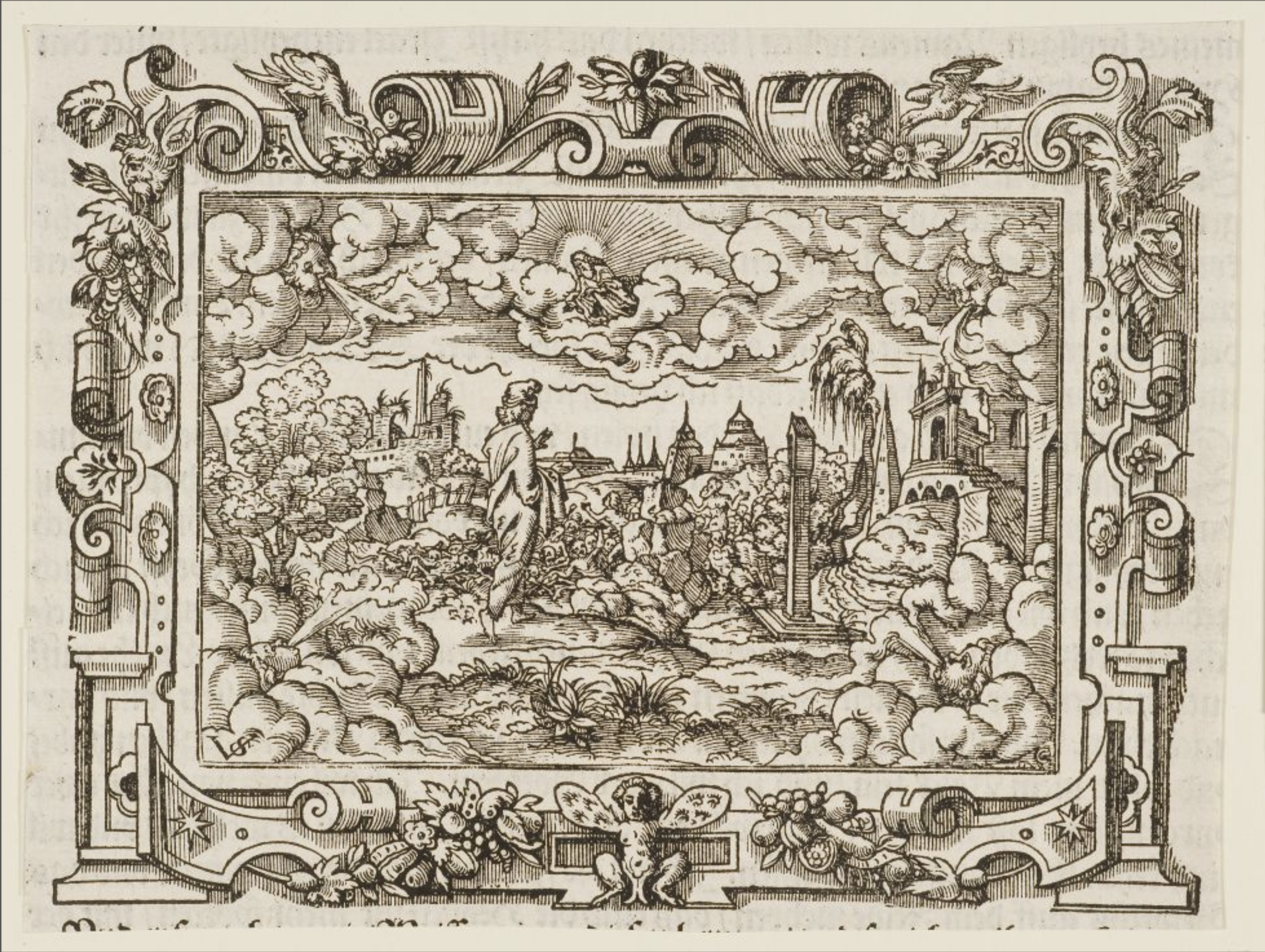
Virgil Solis (1514-62), Ezekiel’s vision of the Valley of the Dead Bones, 1560, woodcut, 12.4 x 16.3 cm., printer: David Zöphel, publisher: Johann Rasch; Kupferstichkabinett, Herzog Anton Ulrich Museum, Braunschweig

Lucas Cranach the younger (1515-86), drawing of The Baptism of Christ, c.1556, pen-&-ink, wash, 13.8 x 18.7 cm., Kupferstichkabinett, Staatliche Museen zu Berlin

Lucas Cranach the younger (1515-86), Portrait of N.N. Stähelin of Nördlingen with six children, from Cranach’s so-called ‘Family tree’, 1542, watercolour, gold leaf, 36.5 x 24.4 cm., Kupferstichkabinett, Staatliche Museen zu Berlin

Lucas Cranach the younger (1515-86), Portrait of Johannes Bugenhagen (Pomeranus), from Cranach’s so-called ‘Family tree’, 1542, watercolour, gold leaf, 36.3 x 24 cm., Kupferstichkabinett, Staatliche Museen zu Berlin

Lucas Cranach the younger (1515-86), Portrait of Justus Jonas, from Cranach’s so-called ‘Family tree’, 1542, watercolour, gold leaf, 35.9 x 23.8 cm., Kupferstichkabinett, Staatliche Museen zu Berlin
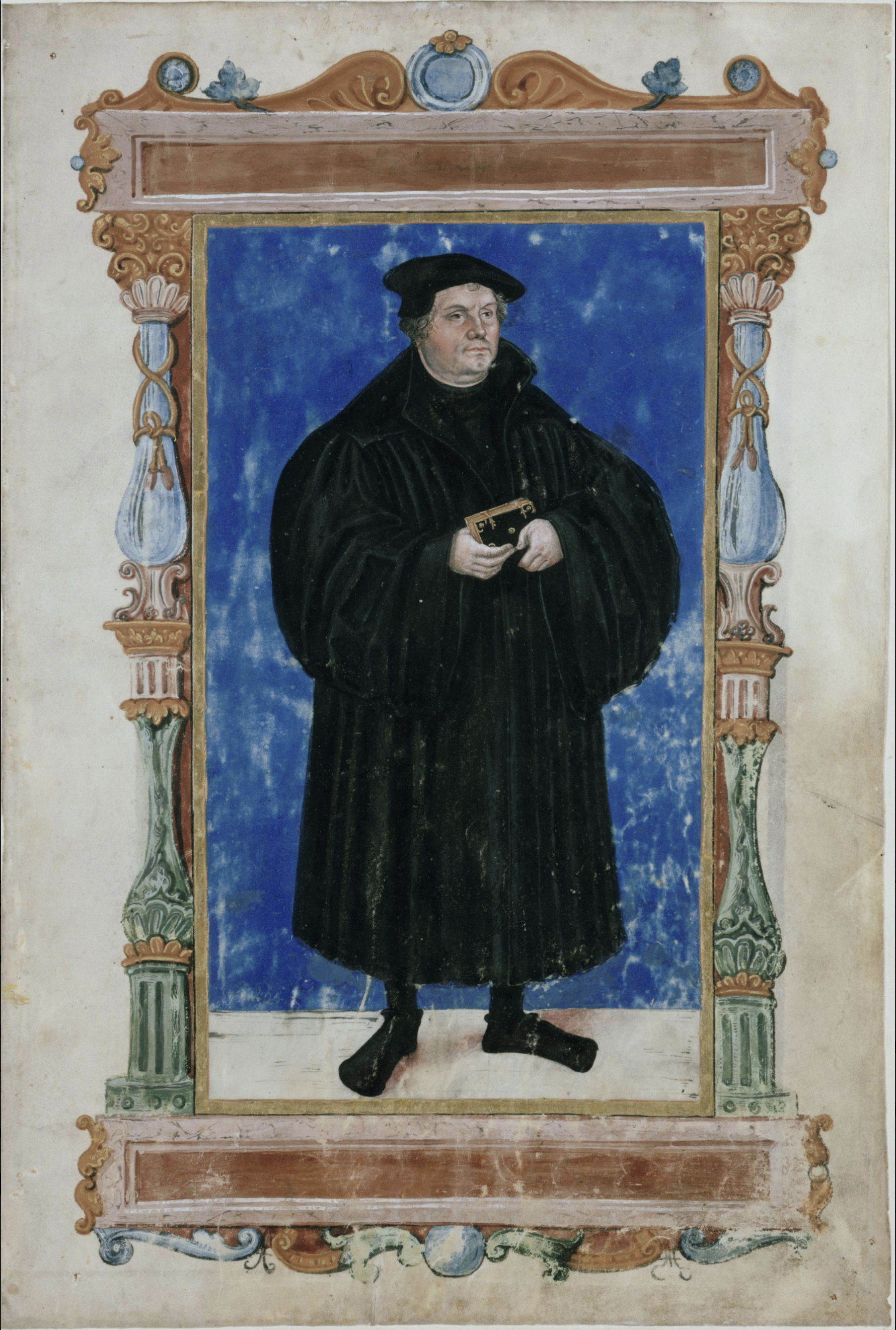
Lucas Cranach the younger (1515-86), Portrait of Luther, from Cranach’s so-called ‘Family tree’, 1543, watercolour, goldleaf, 36.5 x 24.6 cm., Kupferstichkabinett, Staatliche Museen zu Berlin

Christoph Schwarz (fl.1545-92), The Archangel Michael drives Lucifer into hell, second half 16th century, pen-&-ink, wash, white heightening, 42.3 x 31.5 cm., Kupferstich-Kabinett, Dresden State Art Collections
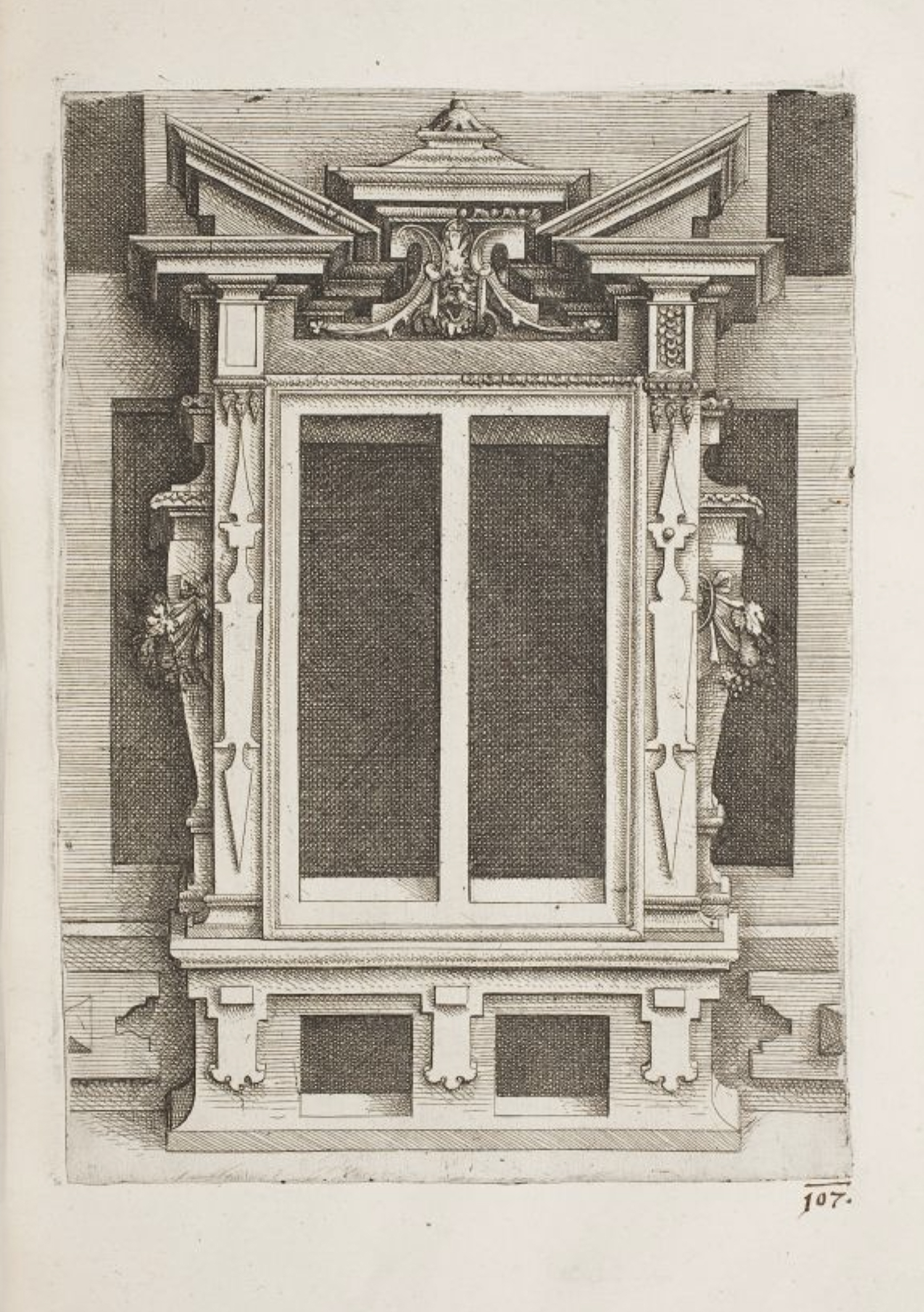
Wendel Dietterlin (1550-99), design for a Mannerist window, etching, 1598, plate 25 x 18 cm., Kupferstichkabinett, Herzog Anton Ulrich Bibliothek, Braunschweig
 The Frame Blog