
Germany & Low Countries
17th century German, Flemish & Netherlandish drawings
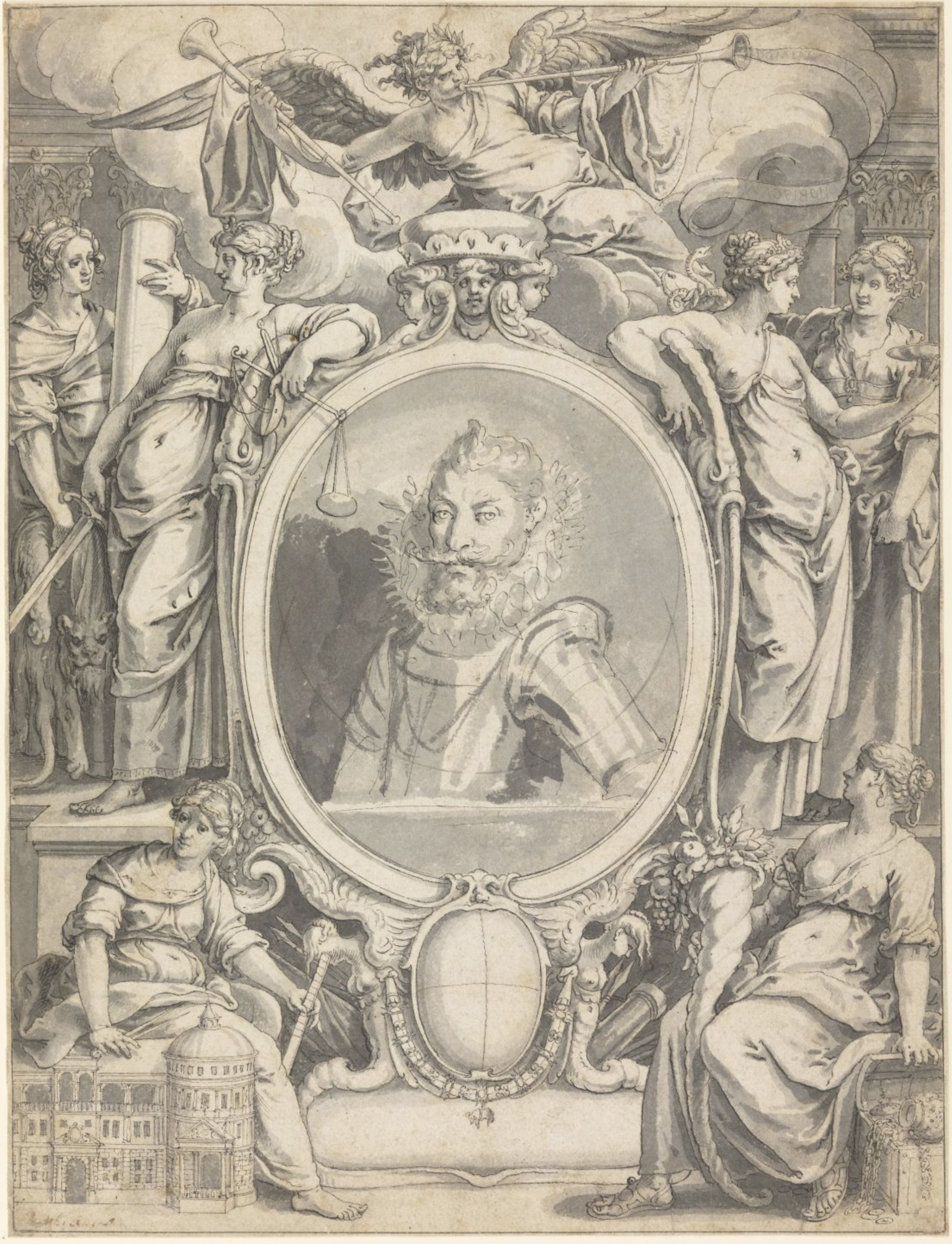
Johann Matthias Kager (1566–1634), Maximilian I of Bavaria in an Auricular frame, 1614-24, pencil, pen-&-ink, wash, 32 x 24.4 cm., Kupferstichkabinett, Herzog Anton Ulrich Museum, Braunschweig
‘Design for the first state of Wolfgang Kilian’s copperplate engraving from 1619 (illus. exhibition Munich 1980, cat. no. 242 with illustration) before the plate was altered, the coat of arms moved upwards, and the final phase of the Battle of White Mountain, November 8, 1620, was inserted into the cartouche below (see exhibition cat. Munich 1980, cat. no. 522 with illustration). See also the sheet from the special collection of illuminated portraits in the Braunschweig Print Room.’

Rembrandt (1606-69), study for the Portrait of Maria Trip, c.1639, pen-&-ink, wash, heightened with white, unruled framing lines in the same medium, both in pen and in wash, 16 x 12.9 cm., © The Trustees of the British Museum
‘Entry from Martin Royalton-Kisch, ‘Catalogue of drawings by Rembrandt and his school’, 2010, Rembrandt, cat. no.23…
The drawing is related to Rembrandt’s Portrait of a Young Woman, probably Maria Trip, now on loan to the Rijksmuseum, which was painted in 1639 (Bredius 356, Corpus A131)… The general proximity of the drawing to the painting prompted the suggestion that its function was that of a modello, approved by the patron, rather than a preliminary sketch.[3] This idea receives some support from two further features of the drawing: the unusual presence of an indication of the picture frame, and the style, which is neater than in most of Rembrandt’s preliminary sketches for his paintings and might indicate that it was for the patron’s inspection as well as for the artist’s own use… The inclusion of the picture frame in the British Museum’s sheet might indicate that Rembrandt was already concerned with a possible adjustment to the painting’s dimensions’.
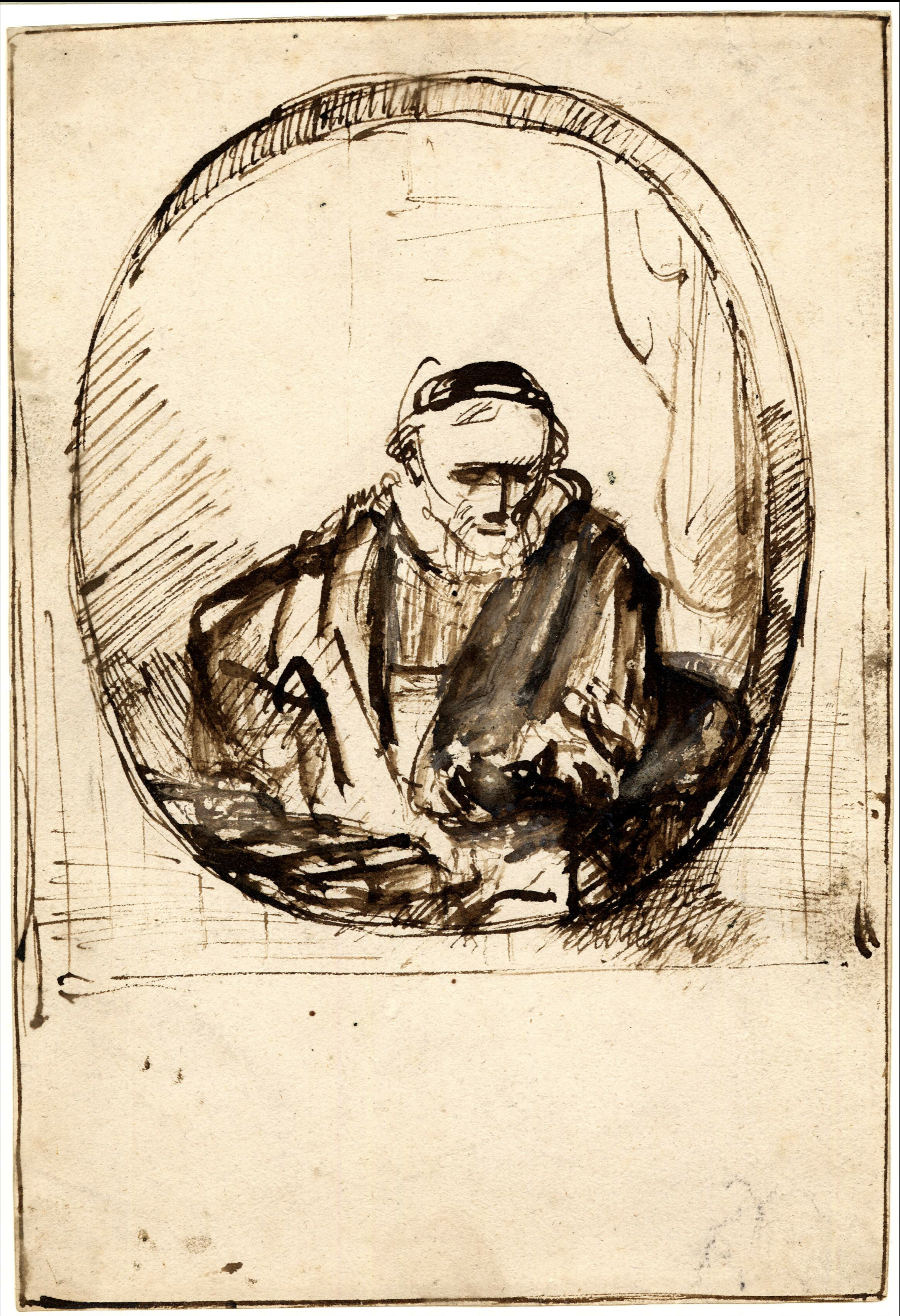
Rembrandt (1606-69), sketch for the posthumous etching of Jan Cornelisz Sylvius, c.1646, pen-&-ink, wash, heightened with white, 28.5 x19.5 cm., © The Trustees of the British Museum
‘Entry from Martin Royalton-Kisch, ‘Catalogue of drawings by Rembrandt and his school’, 2010, Rembrandt, cat. no.37… Another sketch for the etching, apparently made before the British Museum’s drawing, is in Stockholm (Benesch 762a). It shows the sitter turned to the right, but the fictive oval frame and the lines of poetry that appear in the print below the sitter are already anticipated. In the present sheet Rembrandt introduced the motif of the hand thrust forward, casting a shadow on the frame, an illusionistic device which is given yet greater prominence in the etching.’
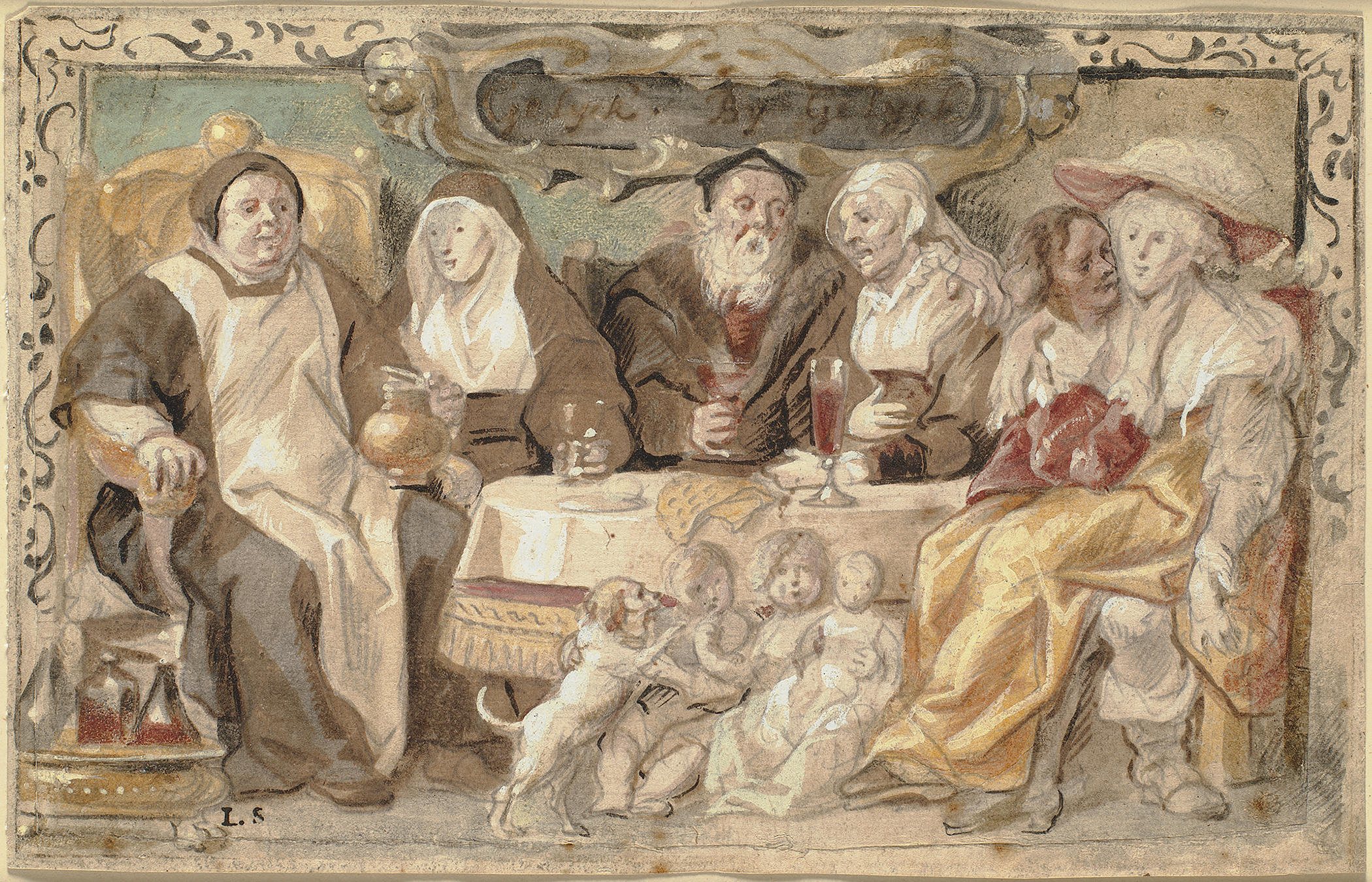
Jacob Jordaens (1593-1678), Lige børn leger bedst [Like to like], 164-45, watercolour, 13.9 x 21.8 cm., Statens Museum for Kunst, Denmark
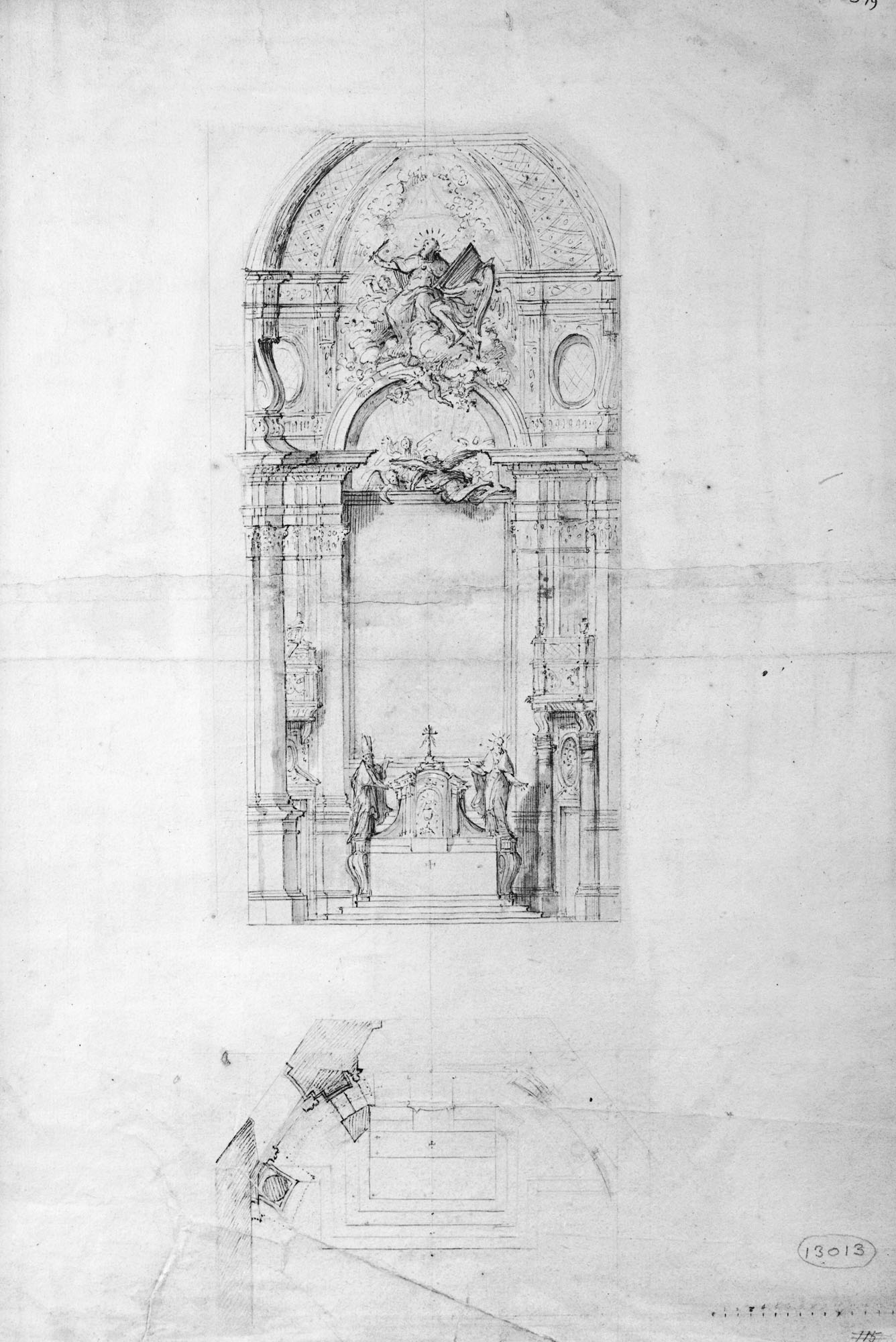
Hendrik Franciscus Verbrugghen (1655-1724), first design for the high altar of the Augustinian church, Antwerp, c.1680-1709, pen-&-ink, wash, pencil, 47.3 x 31.8 cm., Royal Collection Trust. RCIN 913013
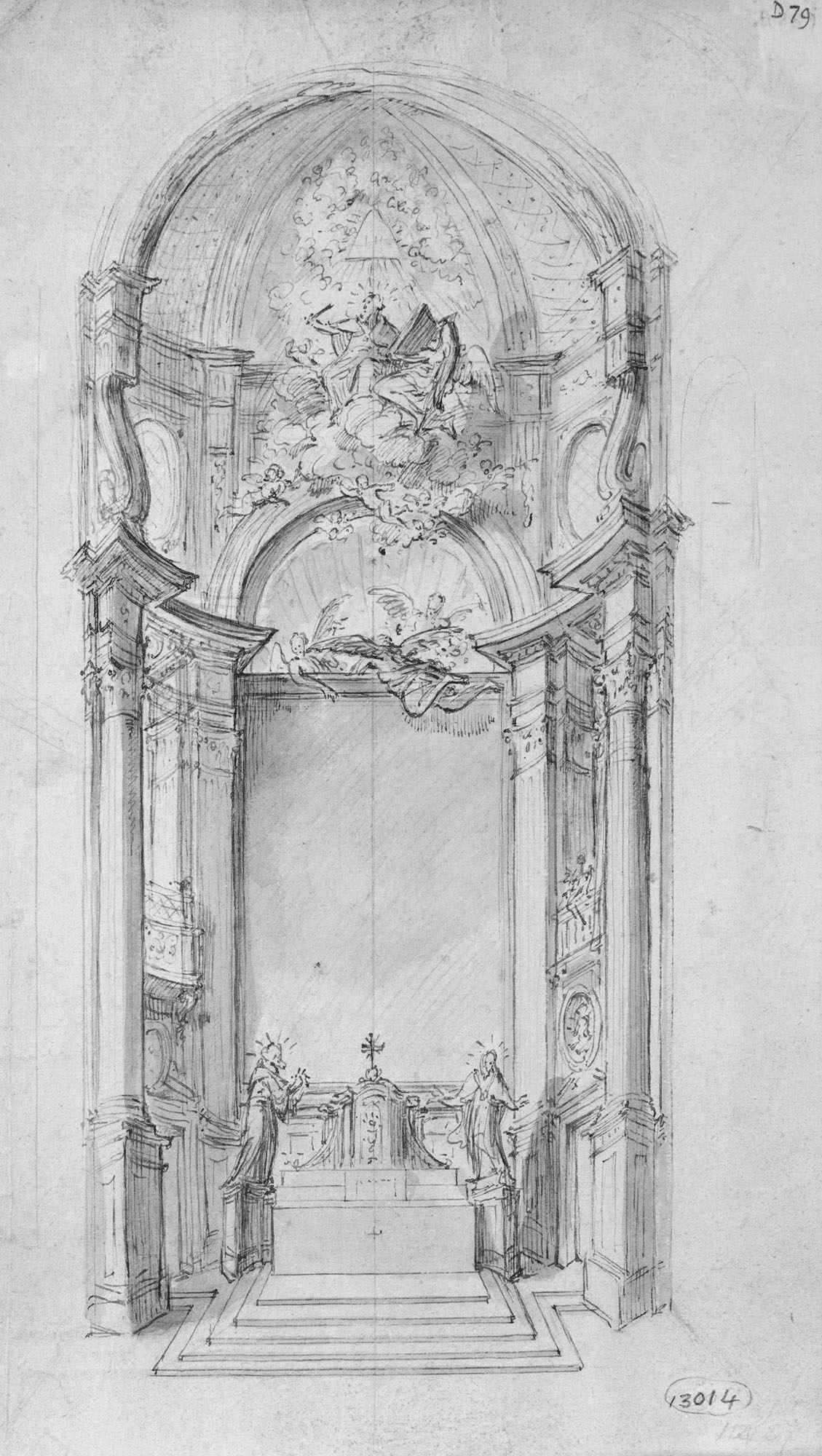
Hendrik Franciscus Verbrugghen (1655-1724), second design for the high altar of the Augustinian church, Antwerp, c.1680-1709, pen-&-ink, wash, pencil, 31.9 x 18.3 cm., Royal Collection Trust. RCIN 913014

Hendrik Franciscus Verbrugghen (1655-1724), design for a high altar, pen-&-ink, pencil, 33 x 22.3 cm., Département des Arts graphiques, Musée du Louvre
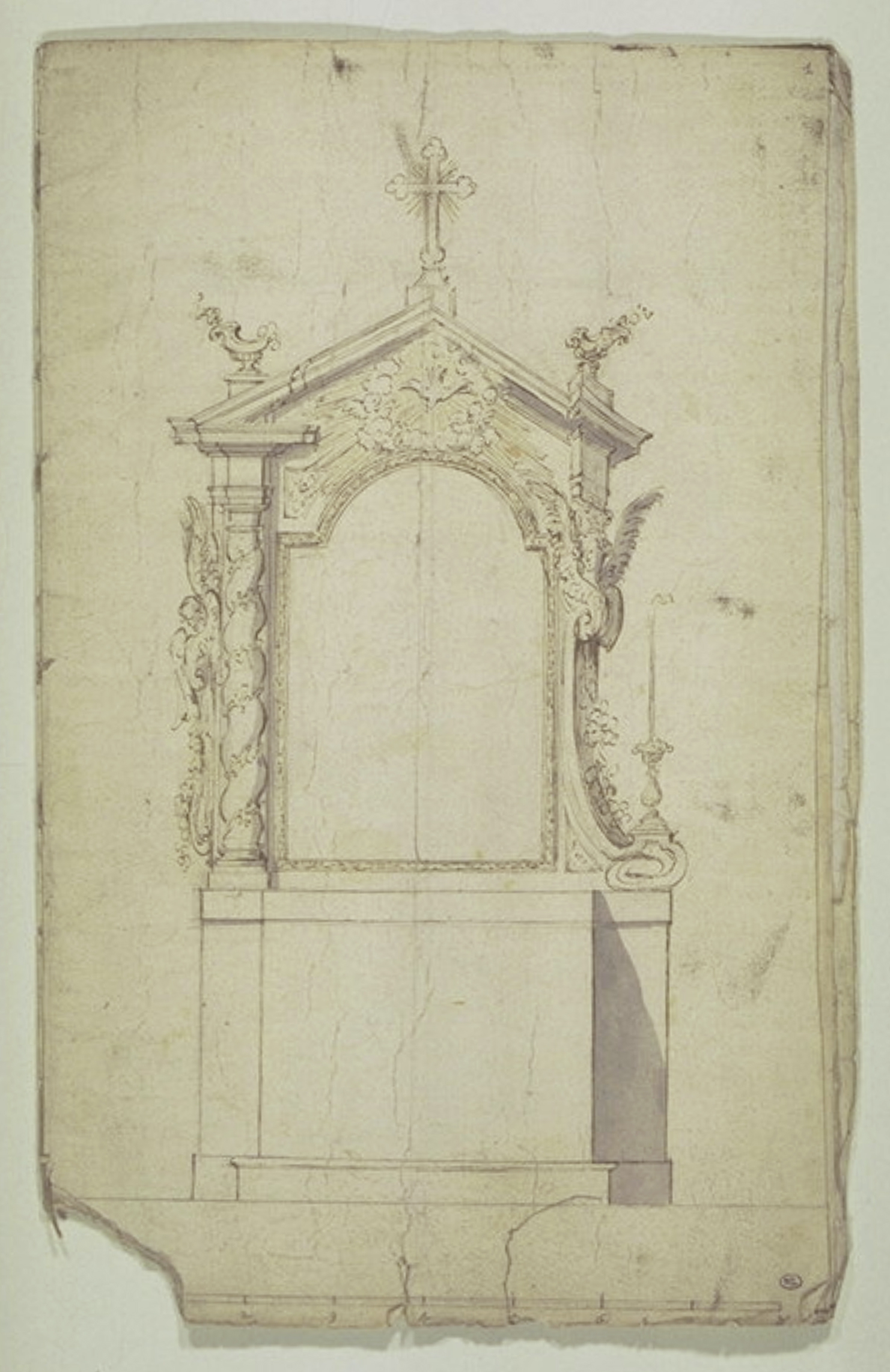
Hendrik Franciscus Verbruggen (1654-1724), design for an altarpiece with two alternative sides, crowned by a cross, pen-&-ink, wash, pencil, 31.2 x 20.3 cm., Département des Arts graphiques, Musée du Louvre

Anon., Flemish school, design for an altarpiece with The mystic marriage of St Catherine, 17th century, wash, 49.8 x 29.6 cm., Département des Arts graphiques, Musée du Louvre
‘Formerly attributed to an anonymous Flemish artist from the beginning of the 17th century… The main image is supported by the figures of St Michael, John the Baptist, and God the Father’.

Anon., Flemish school, design for an altarpiece with the Madonna & Child and John the Baptist, beginning of the 17th century, pencil, wash, watercolour, 58.6 x 29 cm., Département des Arts graphiques, Musée du Louvre
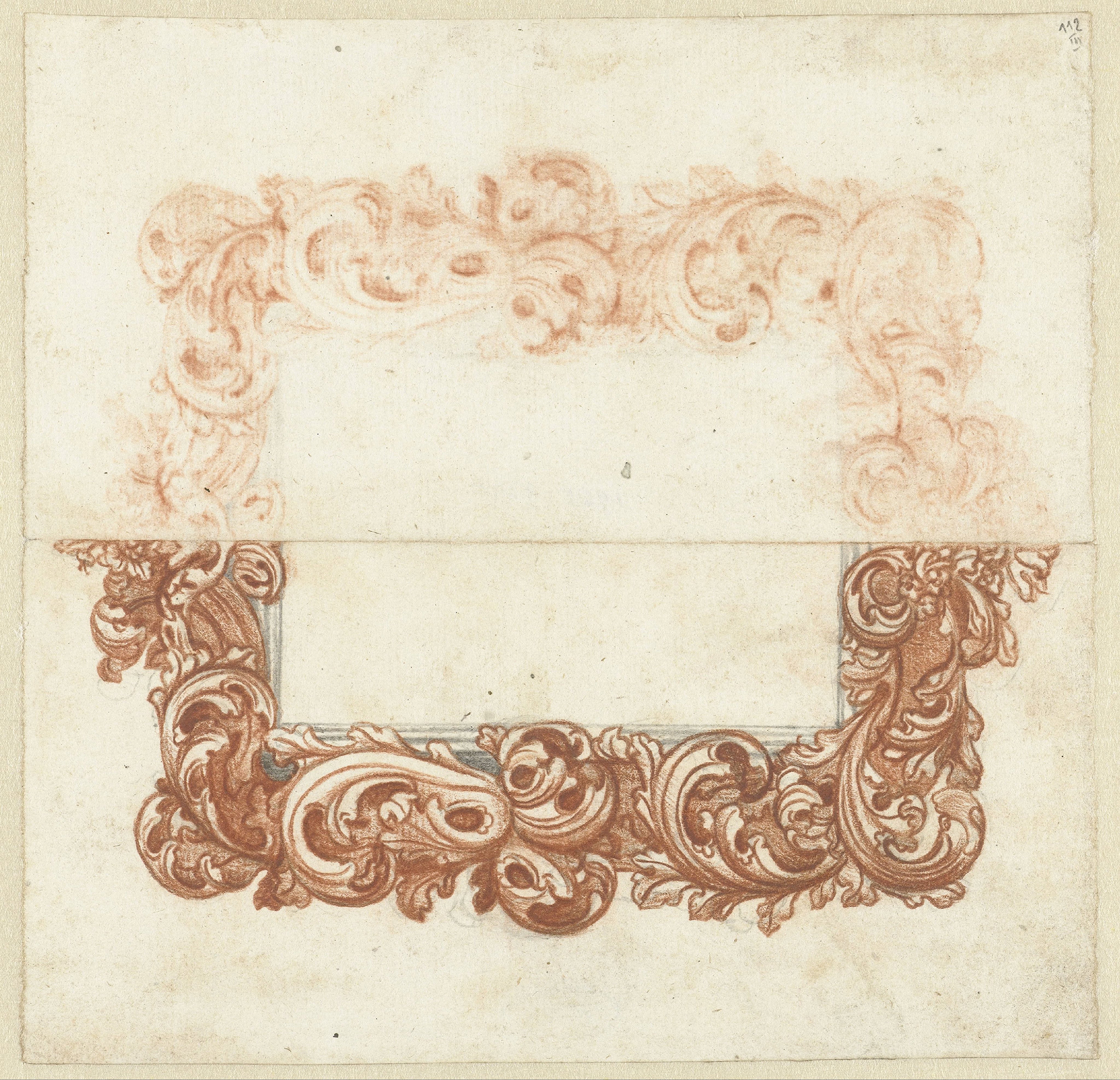
Anon., Low Countries?, design for leaf frame, 17th century, pencil, red chalk, 16.8 x 17.2 cm., Rijksmuseum

Anon., 17th century German school, design for a leaf frame, with alternate options, c.1680-1700, pencil, pen, watercolour, 31.4 x 22.6 cm., Rijksmuseum

Anon., 17th century German school, design for a coat of arms with two putti holding a crown, pen-&-ink, wash, black chalk, 22.4 x 16.1 cm., Metropolitan Museum, New York
 The Frame Blog