
Book review: Omkaderd/ Framed
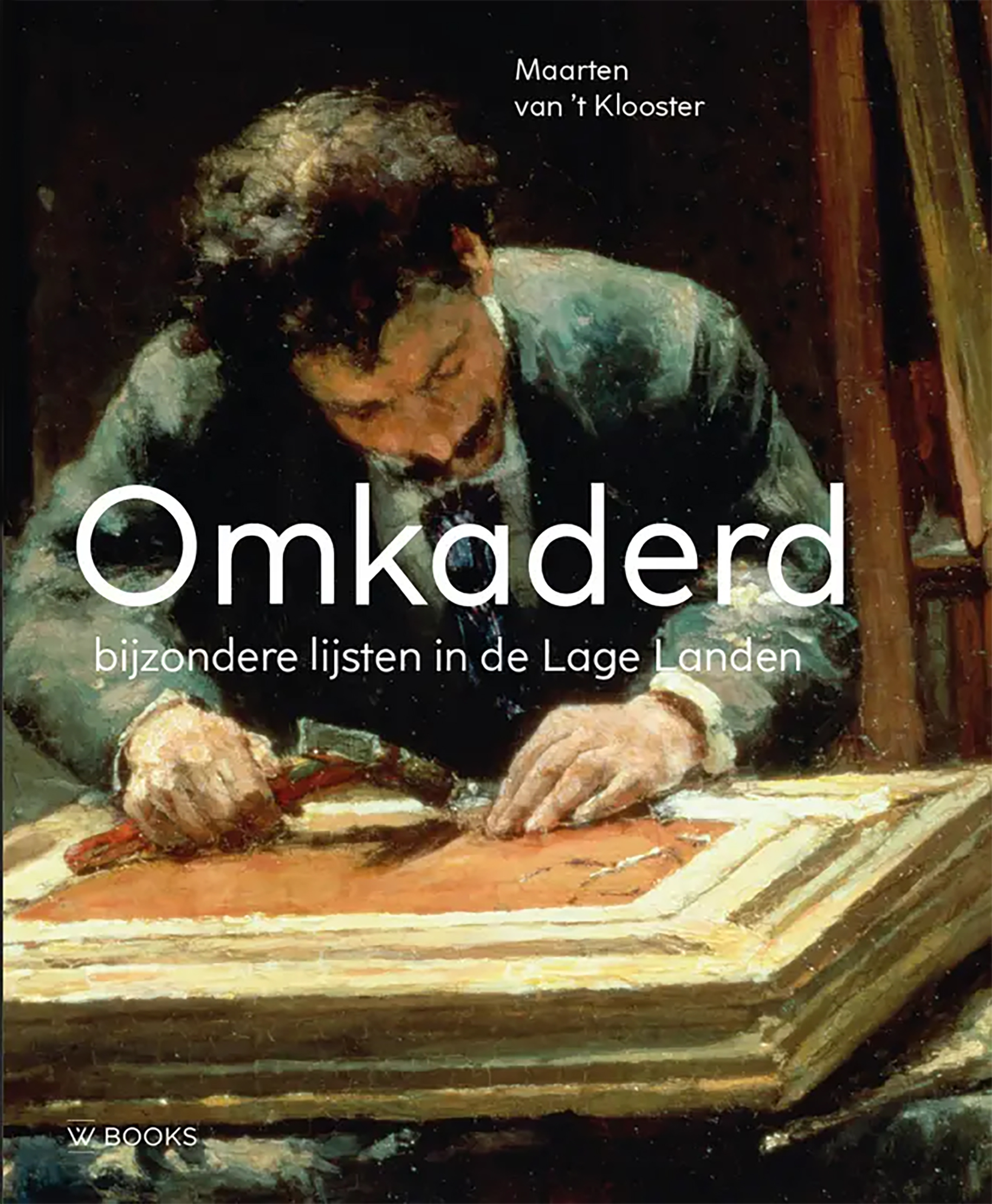
Here is a review of a recently published book on frames by Maarten van ‘t Klooster. Or, rather, here are four reviews of the same book – two by a layperson (at whom the work is primarily aimed), and two by a frame specialist (both in English and in Dutch, since that’s the language of the book).
With luck, it will be successful enough to be published in an English translation, and possibly in other languages – because the more books we have to explain to the uninitiated how beautiful, fascinating and important frames are, the better-served every painting and every museum visitor will be.
OMKADERD / FRAMED
Maarten van ’t Klooster, Omkaderd | Bijzondere lijsten in de Lage Landen (Framed | Special frames in the Low Countries), published by WBooks, Zwolle, September 2025, ISBN 978 94 625 8672 7, pp. 160, 169 b/w and colour ill., €34.95
Review by Hubert Baija
Omkaderd is a book on picture frames which was published in autumn 2025 by Dutch art historian Maarten van ‘t Klooster. In his introduction, the author expresses the wish that,
‘…armed with new knowledge, the reader will no longer be able to visit a museum without also paying attention to the frames.’
As a long-time professional in the world of frames and framing, I am very pleased to be reviewing this book, and I’d like to begin with the full title: Omkaderd – bijzondere lijsten in de Lage Landen. This roughly translates into English as ‘Bordered: remarkable frames in the Low Countries’. The rather archaic Dutch word omkaderd means ‘framed’ and is a well-chosen term, more precise than the usual word, lijst, which has several other meanings besides ‘picture frame’ – for example boodschappenlijst for ‘grocery list’, andverlanglijstje for ‘wish list’.
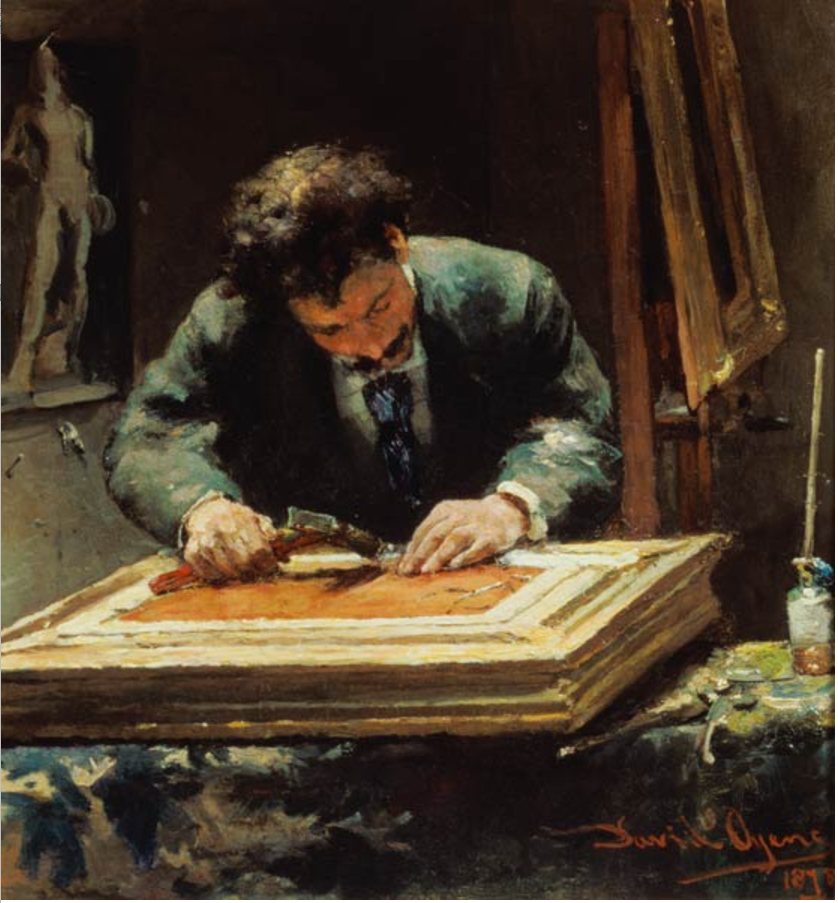
David Oyens (1842-1902), The picture framer (?Felix Mommens), 1871, Teylers Museum, Haarlem
The book itself is a real eye-opener for a novice audience, and it would take many days physically to see all the artworks discussed, from Groeningen to Antwerp and from Enschede to Amsterdam. The front cover carries a 19th century framemaker concentrating on his delicate work, transporting the reader into a quiet analogue moment such as many museum visitors are looking for, to escape from the frenzy of the digital world.
Omkaderd is a book with undeniable charm, presenting the main material in bite-sized and very clear entries. The analysis of more contentious subjects, such as what an ‘original frame’ means and what the ‘original frame’ of a painting is, together with more technical aspects, is mostly sidestepped. In this, the author seems to be taking care not to scare the layman away with endless details or philosophic speculations, and rightly so. The reader is led through a wonderland of picture frames by a guide with the ability to convey his knowledge fluently.
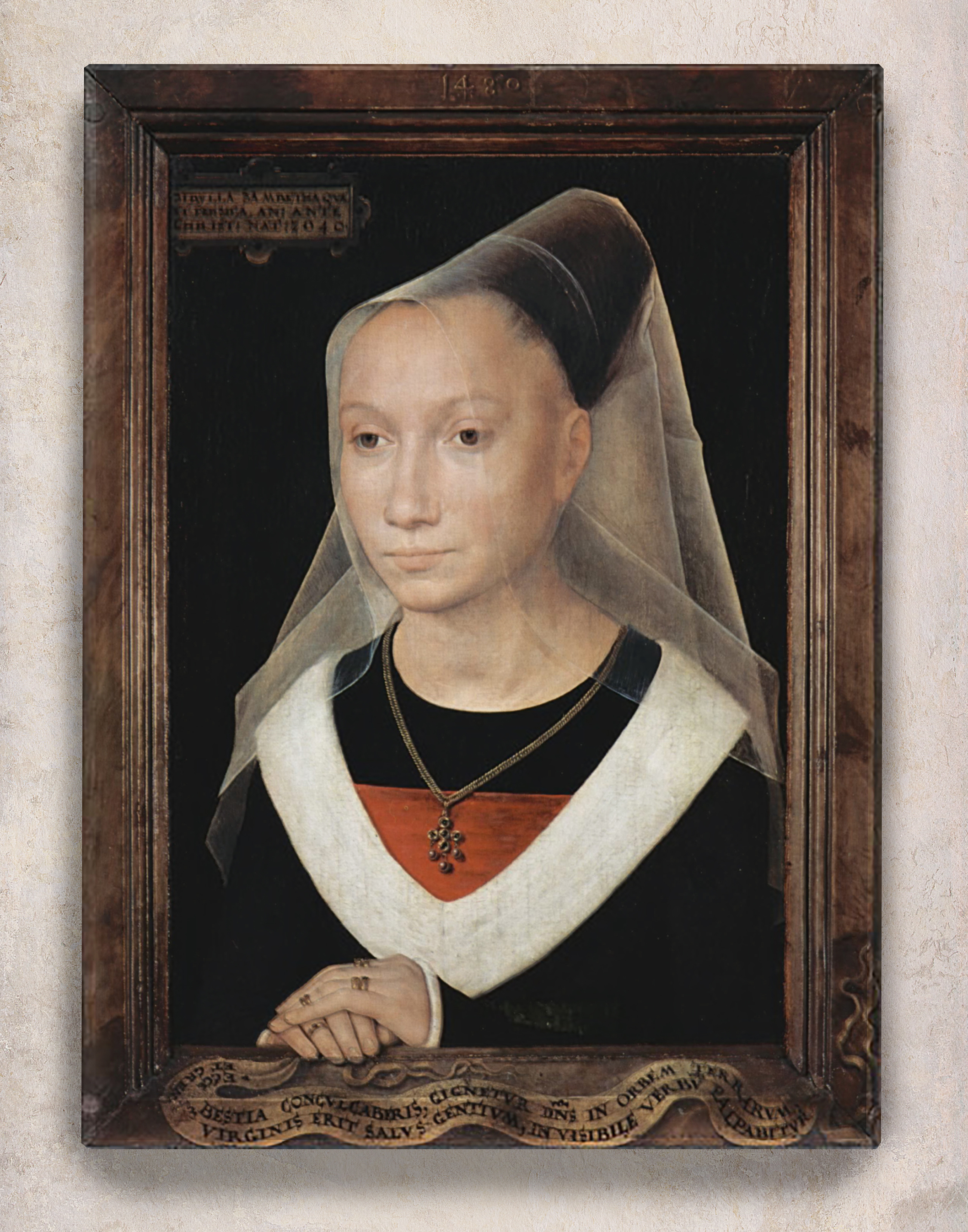
Hans Memling (c.1433-94), Portrait of a woman, 1480, panel, 38 x 26.5 cm., 46.6 x 35.2 cm. overall, Sint-Janshospitaal, Bruges
The geographical term Lage Landen or the Low Countries of the title implies the cultural and historical common ground between the Netherlands and Belgium. It also implies the fair division of artworks between both countries, although only six of the fifty-one entries address Belgian museums. This imbalance could perhaps be corrected one day, by adding further entries in the main body of the book or by adjusting the title.
A thirteen-page overview of the history of frames helps the reader to orient him- or her-self within the various stylistic periods. The nomenclature for frames hasn’t yet been completely established, and what is agreed isn’t always adhered to, but this lies outside the scope of the book [1]. After the introductory history of the frame, the main substance follows – a catalogue composed of selected examples of framed paintings, and an accompanying text full of insights. A valuable glossary and a helpful guide to reference literature and websites on frames close the book. At this stage, no alphabetical index is included.
Over a hundred pages, the contents of an imaginary museum are created, bringing together examples of framed paintings which physically reside in different collections. Although the criteria for inclusion in this selection are intuitive, the result is very appealing. The entries are full of lively background stories and historical perspectives, as well as perceptive comments about refinements in design. The titles of the entries have, almost without exception, an intriguing and often witty tone which draw one on to continue reading. The typeface is clear and easy to read, and the illustrations are excellent and large enough to study.
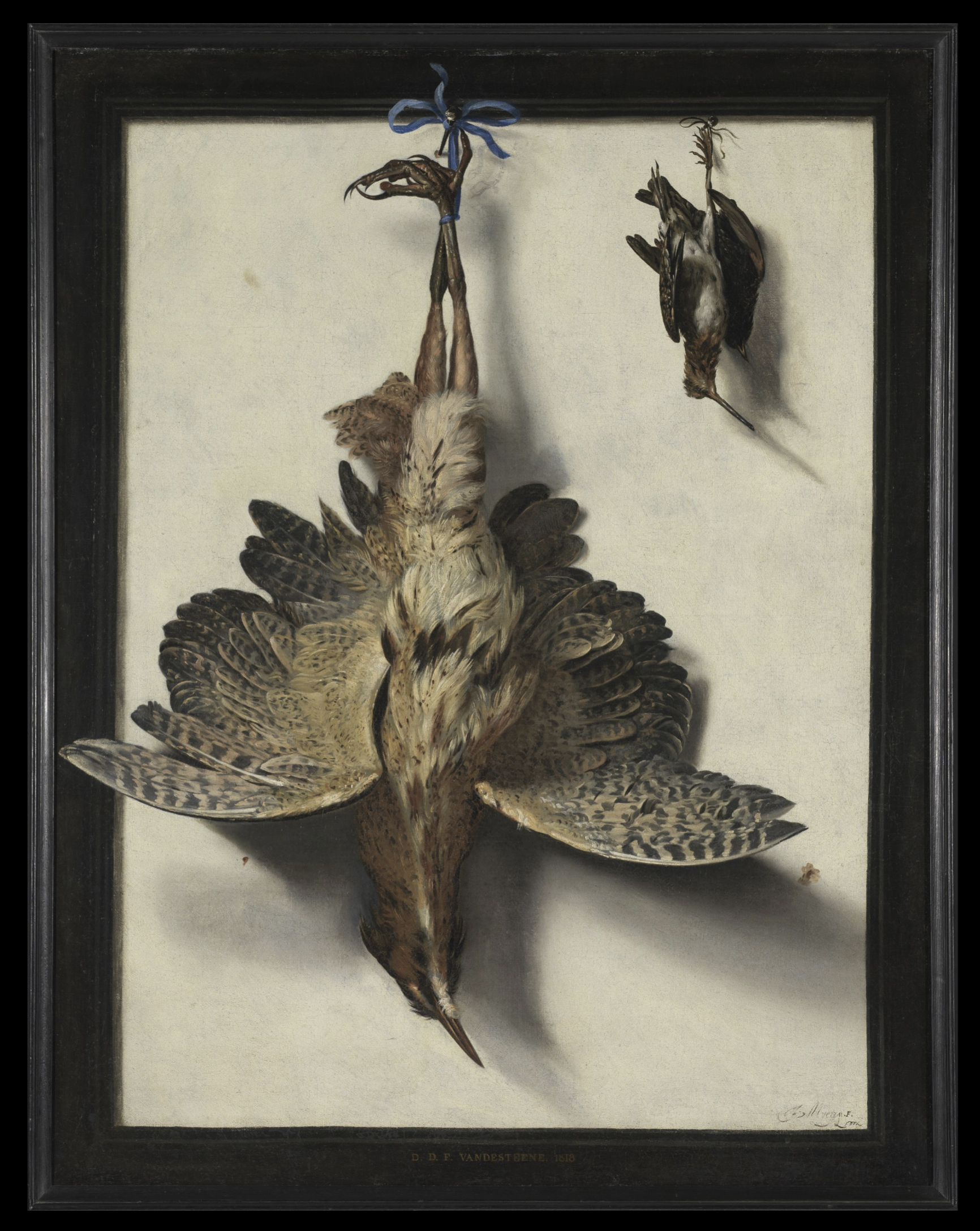
Frans van Cuyck de Myerhop (c.1640-89), Still life with birds, 1670s, o/c, 120 x 93 cm., Groeningemuseum, Bruges
The entries are grouped under six chapter headings. To illustrate the diversity of their contents, I post here a summary of artists addressed in the six chapters:
- ‘Trompe-l’oeil‘:
including works by Hans Memling, the Master of the Princely Portraits, Joos van Cleve, Frans van Cuyck de Myerhop, and anonymous artists
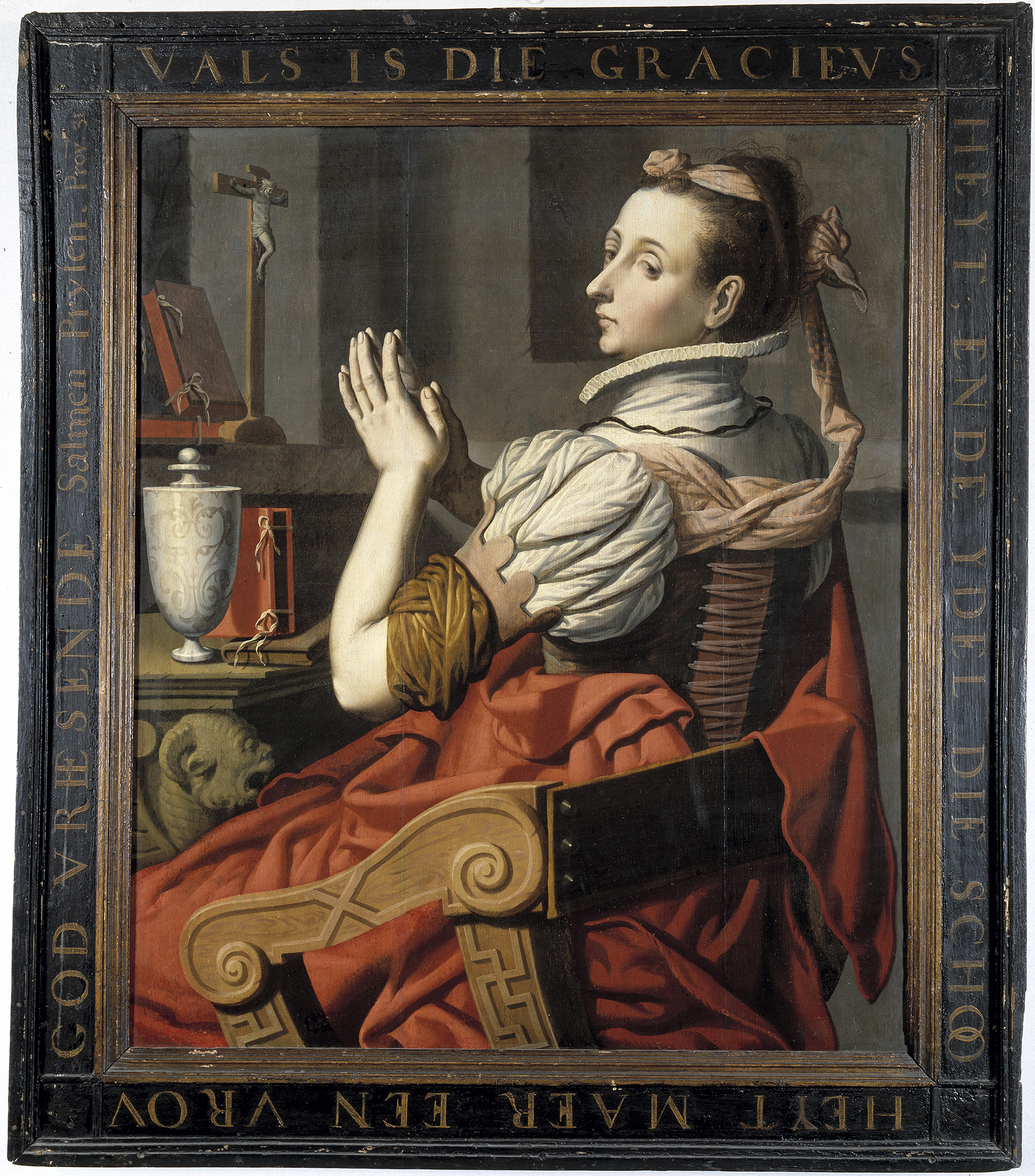
Pieter Pietersz I (c.1540/41-1603), The penitent Magdalene, 1575>, 82 x 69.5 cm., Catharijneconvent, Utrecht
- ‘Moulding frames’:
including works by Pieter (I) Pietersz, Jacob Fransz van der Merck, Hendrick Goltzius, and anonymous artists.
- ‘New owner, new frame’:
including works by Jean Clouet, Peter Paul Rubens, Lucas van Leyden, Jan Asselijn, Wilhelm Johann Martens, Gottfried Kneller, and Vincent van Gogh.
- ‘Artist’s frames’:
including works by Pierre Puvis de Chavannes, Frans Post, Odilon Redon, Jan Toorop, Arthur Segal, Salvador Dali, Gerrit Willem Dijsselhof, Laurens Alma Tadema, Georges Vantongerloo, and Piet Mondriaan.
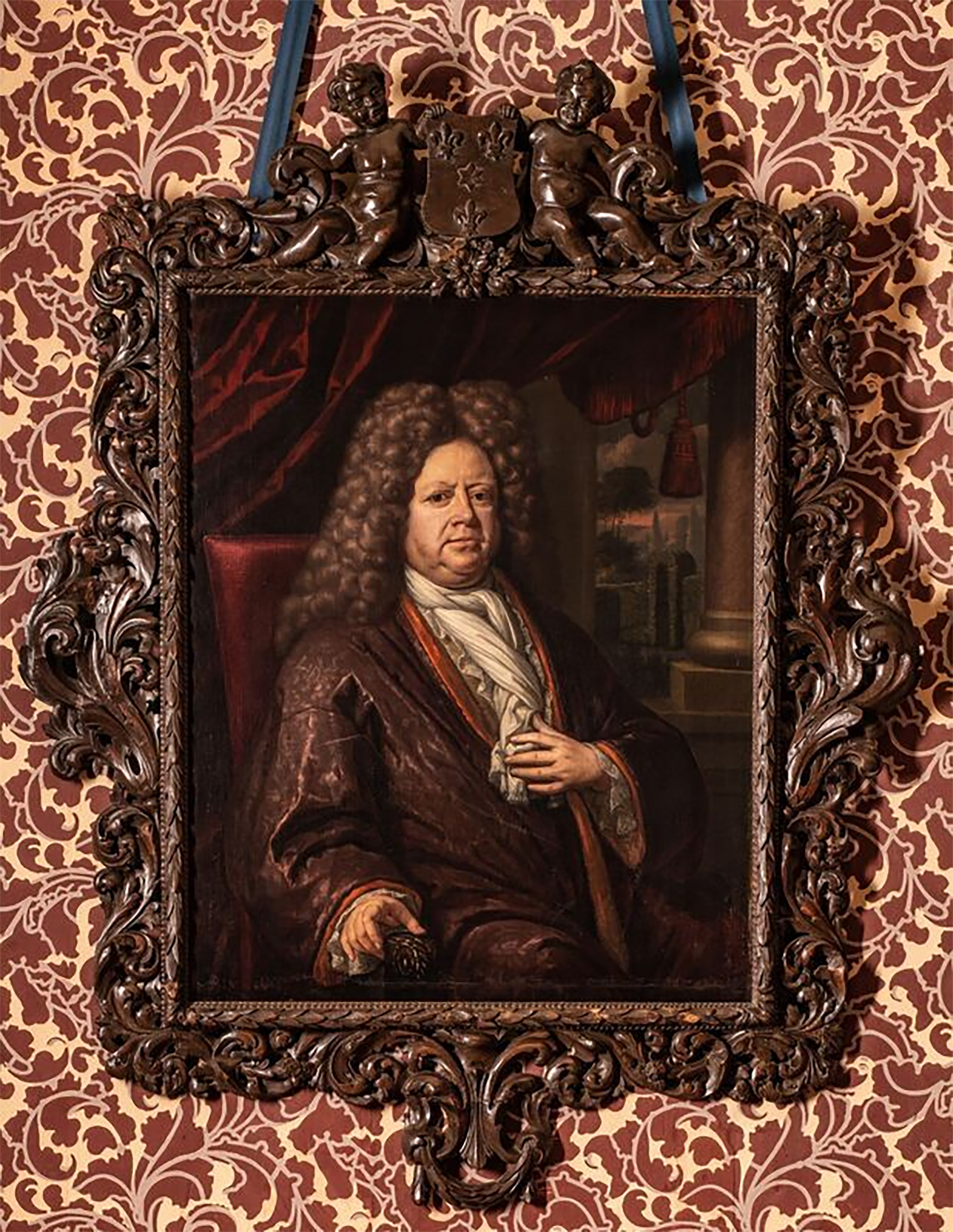
Hermannus Collenius (1650-1723), Portrait of Onno Tamminga Alberda van Rensuma, 1710-15, 108 x 88 cm., Groninger Museum/ Menkemaborg, Uithuizen
- ‘In fashion’:
including works by Bicci di Lorenzo, Jacopo di Casentino, Neri di Bicci, Gerard ter Borch, Derck Daniels, Philip van Dijk, Jan de Baen, Alexander Roslin, Jan Stolker, Hermannus Collenius, Jean Mone, Jacob van Campen, Jean-François Millet, and anonymous artists.
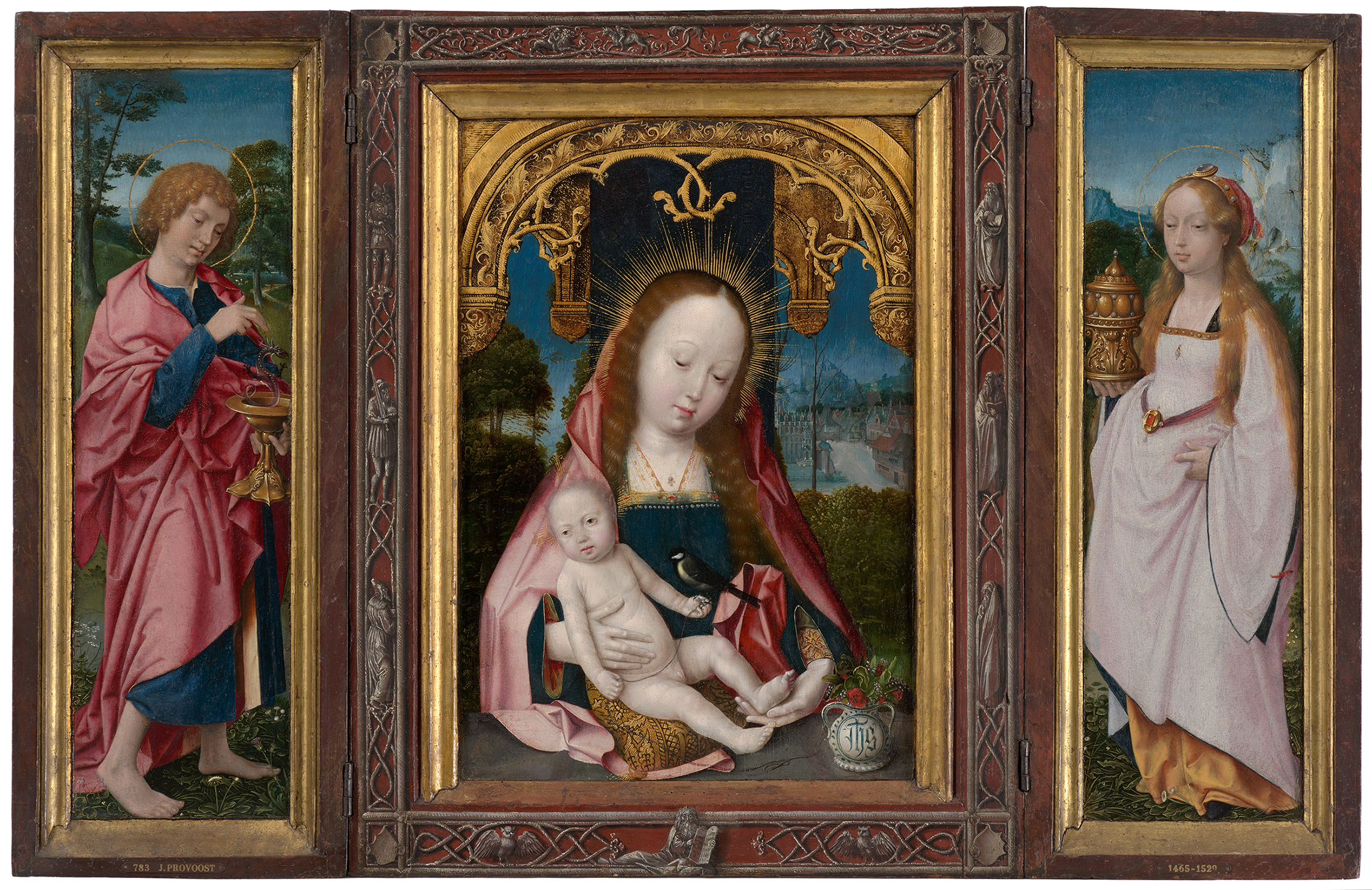
Jan Provoost (c.1464-1529), Triptych with the Madonna & Child, John the Evangelist & Mary Magdalene, c.1520-25, panel, 44 x 30.5 cm., Mauritshuis https://www.mauritshuis.nl/fr/decouvrir-la-collection/oeuvres-d-art/783-triptych-with-the-virgin-and-child-john-the-evangelist-and-mary-magdalene
- ‘An extra meaning’:
works by Jan Provoost, Jan Mijtens, Caspar Peeter II Verbruggen, Pseudo-Bles, Hendrick ter Brugghen, Jan Gossaert, and Benedetto Buglioni.
Maarten van ‘t Klooster’s frame book can be placed in the context of a small international group of kindred publications by comparing it with two works which likewise address the general museum public rather than a specialized scholarly audience.
Nicholas Penny, former director of the National Gallery in London, wrote a very handy guide to picture frames called A closer look at frames, which was first published in 2010 as Pocket Guides: Frames, and shines a light on frames in the Gallery. W.H. Bailey, an American artist and former professor of art at Yale University, wrote Defining edges in 2002. It has a similar organization to Omkaderd, but also a different and slightly more speculative perspective. Thus Van ‘t Klooster the art historian begins his book with ‘Frame history until the beginning of the 20th century’, whilst Baily, primarily an artist, starts with ‘The story of the picture frame’. Half of Bailey’s entries are from the 20th century, while most of Van ‘t Klooster’s entries are surviving examples from the centuries before the last one.
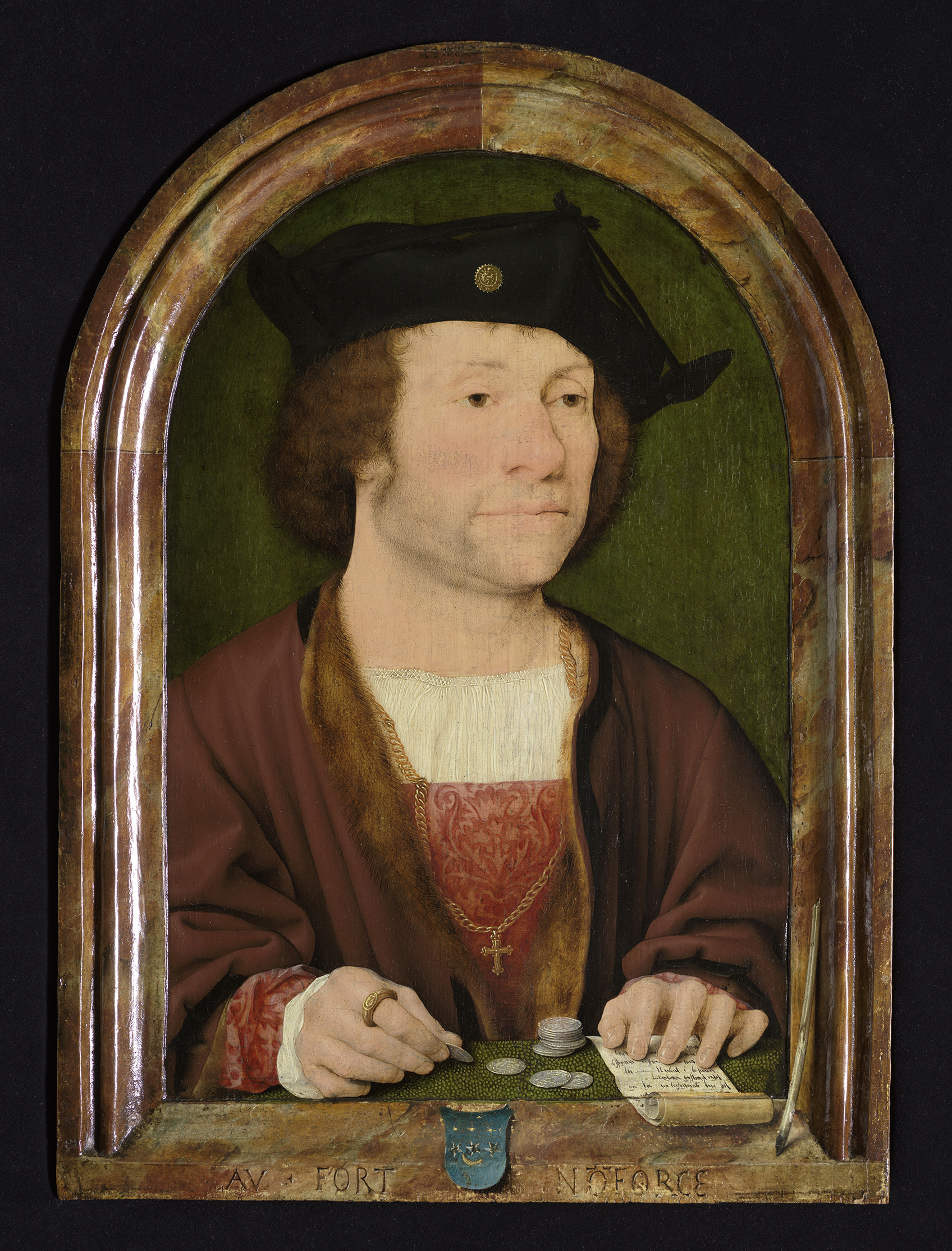
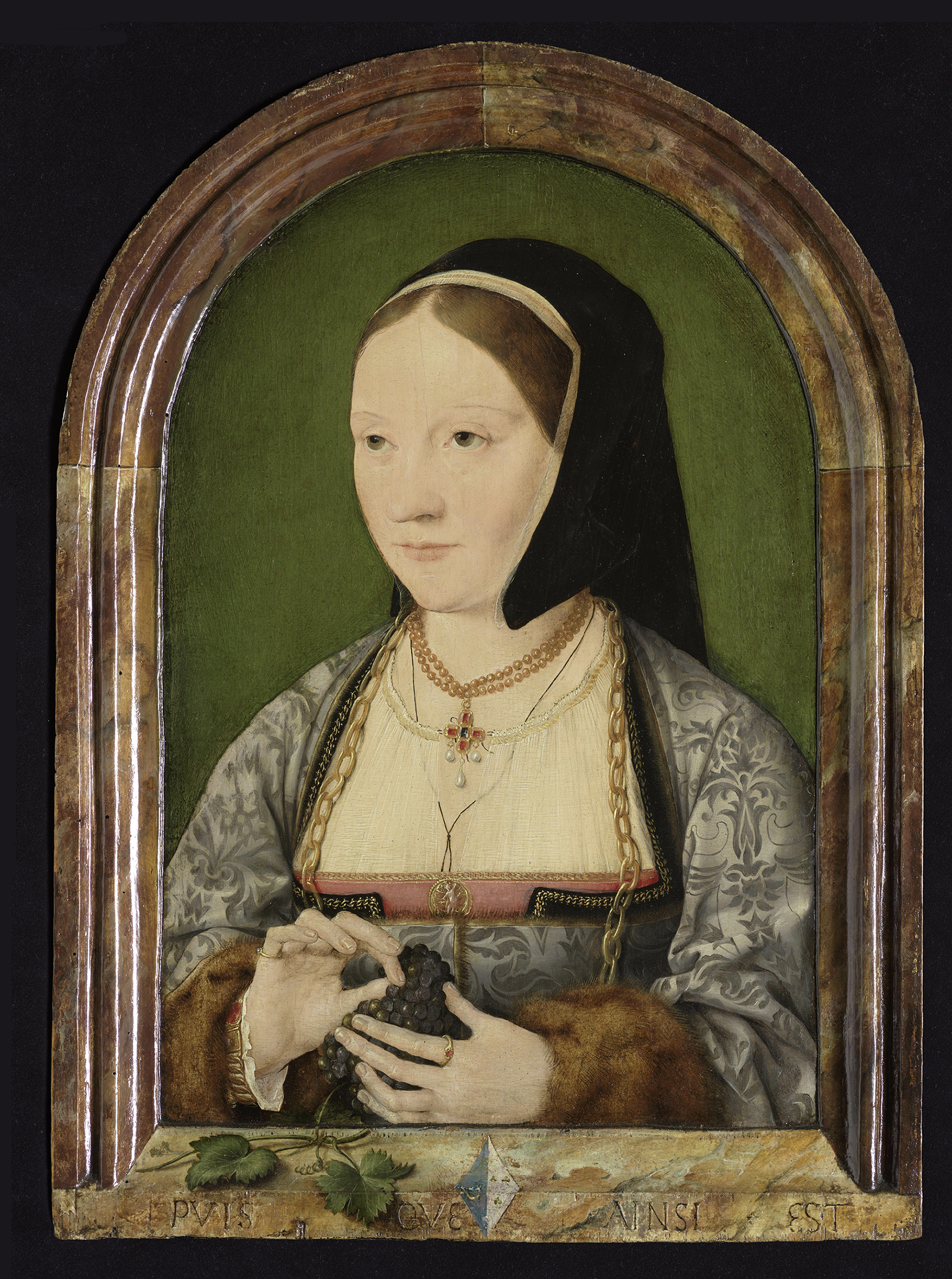
Joos van Cleve (attrib.; c.1485-1540/41), Portrait of an unknown man; Portrait of an unknown woman, both c.1515, panel; both 40 x 28 cm., Rijksmuseum Twenthe, Enschede
Omkaderd is a handsome hardcover publication which will enrich the experiences of art lovers in museums and at home who browse through its illustrated pages. The many prime examples of framed paintings are beautifully presented, highlighted both by the illuminating text and their physical appeal. The size of the book also means larger illustrations and a comfortably-sized typeface, making it more enjoyable and easier to read in lower light levels than its peers. The pleasant semi-matte finish feels good to the touch, wears well, and prevents the cover and pages from showing fingerprints. Last but not least, it’s not at all unwieldy, and isn’t too heavy to carry around museums.
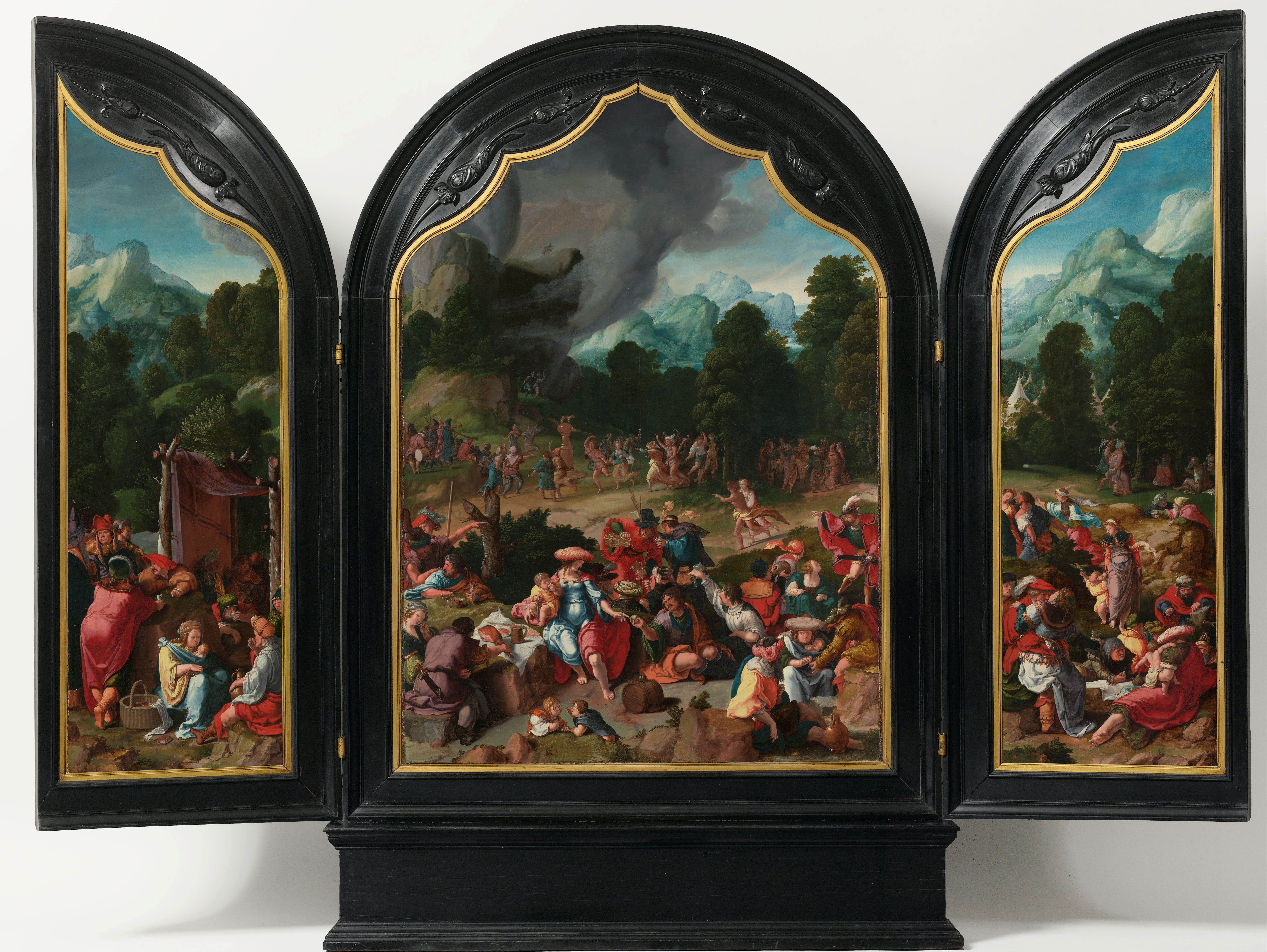
Lucas van Leyden (1494-1533), Worship of the golden calf, c.1530, panel, 91.7 x 30.2, 93.5 x 66.9, and 91.8 x 30.2 cm., Rijksmuseum SK-A-3841
For those of us who enjoy looking at paintings, this new book is a great way to broaden our perspective. Omkaderd will inspire many people to have a second look at paintings they already know, or even to include new venues in their museum outings to see different paintings complete with their frames. May this book find its way to as many hands as possible through bookstores, gift shops, and art museums – and, although written in Dutch, it deserves to be made accessible to a wider audience of art lovers.
************************************
Review by Olga Harmsen
Many times when visiting a museum or an art fair, I’ve caught myself thinking, ‘I like the frame more than the art inside’. I also tend to spend more money at auctions on empty frames than on paintings. I guess I am more of a ‘decorative arts’ person than a ‘fine arts’ person – and I love frames from the period from 1890 to 1915 in particular. Imagine how pleased I was when in 2015 they announced an exhibition on frames in my local museum (On Art and its Margins: the Frame in the Centre: an exhibition at the Dordrechts Museum) – a lovely initiative from the Dordrechts Museum. But that exhibition was really too small for my liking; I wanted to learn more about frames, much more.
Maarten van ‘t Klooster’s new book Omkaderd (Framed) is therefore right up my street. It hasn’t been written for art historians – its purpose is to make the layman (or -woman) aware of frames and their meanings. After reading this book the reader won’t be able to visit another museum without noticing its frames, and, ‘armed with new knowledge’ as the book says, he or she will be able to interpret those frames to the manner born.
The book is organized thematically. It is not a list of the most precious of all frames, and nor does it claim to be complete. It is, rather, an overview of the history of frame styles, and also highlights some very special 15th – early 20th century frames from The Netherlands and Flanders.
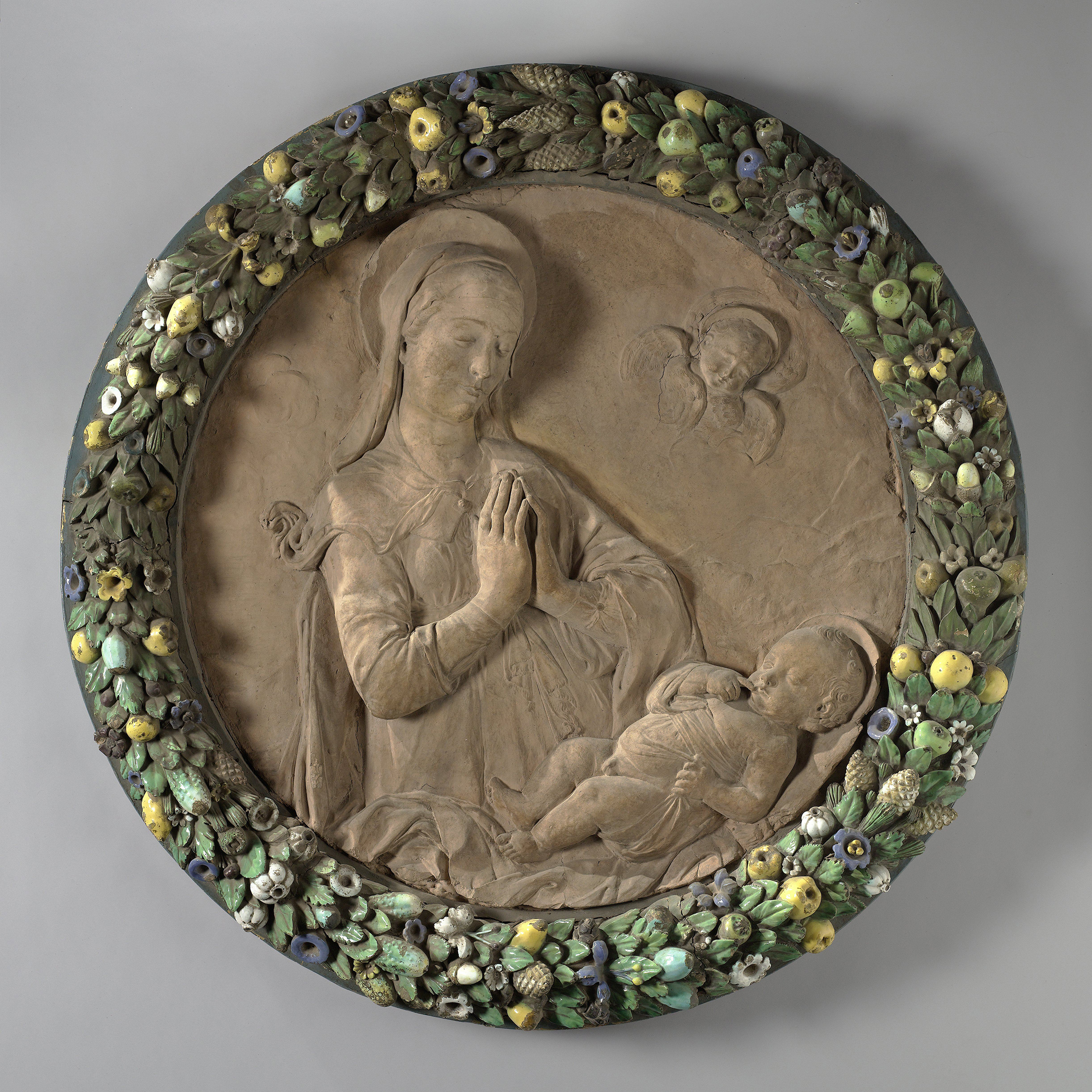
Antonio Rossellino (circle of; 1427-79), Madonna adoring the Christ Child, post-1427, terracotta with polychrome frame, 105 cm. diam., and 120 cm. diam. with frame, Rijksmuseum
At first I wondered why the book began with the 15th century, rather than earlier. That’s actually an interesting question; – I never realized, but, as Maarten explains, before the 15th century, very few moveable frames were made. Early Christian art comprised mostly mosaics, Romanesque art (1000–1150) mostly frescos, and neither were framed in the modern sense. Sacred Gothic paintings, from about 1100-1500, were incorporated in altarpieces – architectural constructions which were designed in the same style as the churches where they lived. Only during the period of the Renaissance (1450–1600) do we start to see independent tondi or round frames, and the moveable rectangular cassetta (little box frame) with an inner and outer moulding separated by a central flat panel or frieze.
In the first part of the book, all the historical styles of frame are briefly touched on: Gothic, Renaissance, Sansovino, the cassetta; and then the Louis XIII, Louis XIV, Louis XV and Rococo patterns, followed by Louis XVI, Empire, Biedermeier and so on. One of the most interesting sections is probably the one examining the extraordinary kwab or Auricular style.
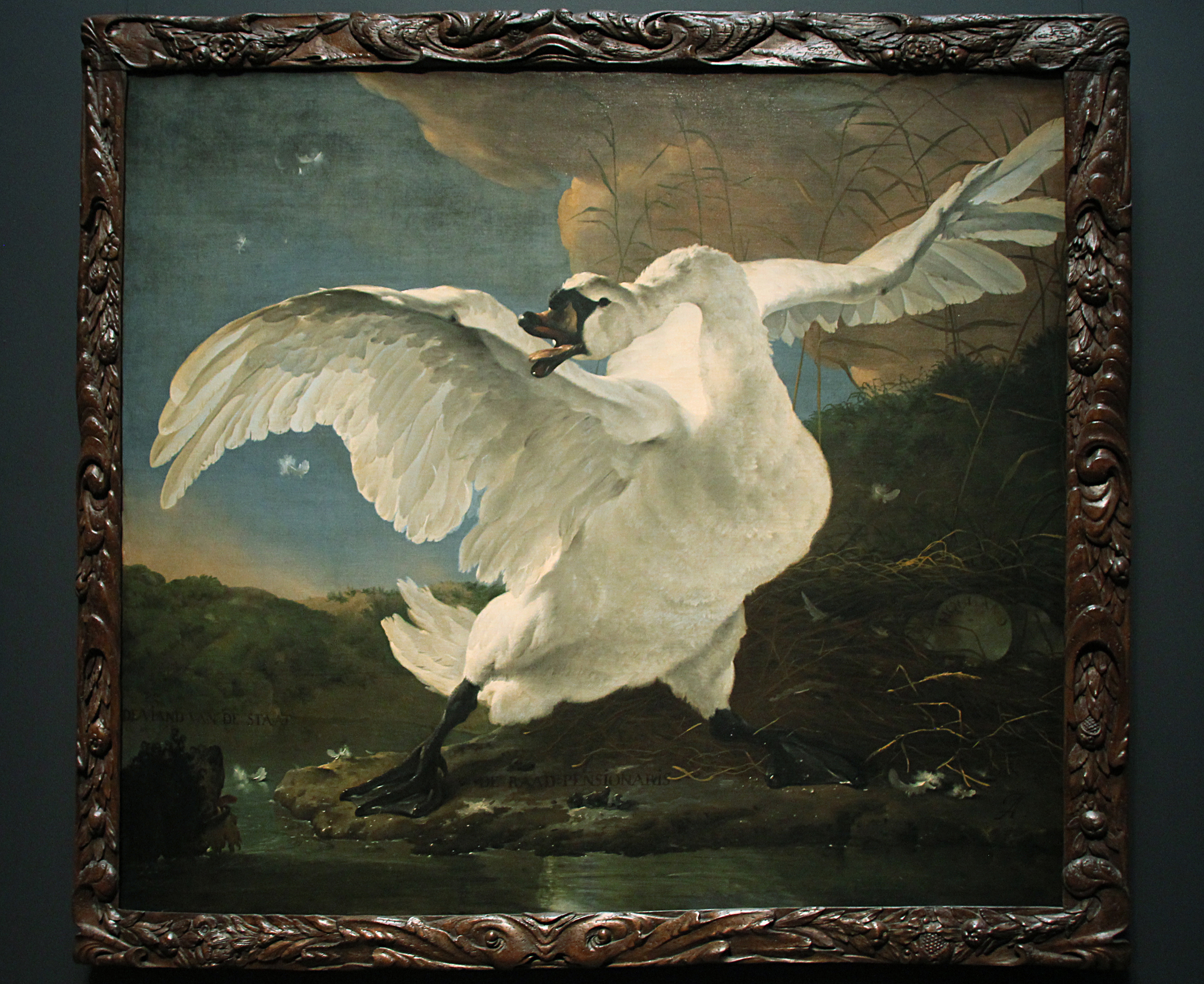
Jan Asselijn (1610-52), The threatened swan, c.1650, o/c, 144 x 171 cm., Rijksmuseum
I specialize in the Art Nouveau period, so this Dutch version of the Auricular style, from the mid-17th century, always fascinates me: it features fantastic sea creatures, whimsical anatomical forms and fluid contours, and is a sort of precursor of Art Nouveau, two hundred years or so ahead of its time. A couple of months ago, I had the opportunity to see again with my own eyes the kwab frame which is shown in Maarten’s book. It featured in the exhibition at the Dordrechts Museum, mentioned above, and frames the painting of The threatened swan by Jan Asselijn, c.1650. A print of this very painting hung over my bed when I was a teenager!
Maarten continues along his timeline through the 1800s, and explains that during the so called ‘ugly period’ at the end of the 19th century, when eclecticism was en vogue, all previous styles were copied, and were usually mass-produced. This meant that ornamental motifs were no longer hand-carved into the wooden structure of the frames, but were moulded from plaster (a paste of chalk and glue) and stuck to the bare wooden mouldings. This technique was fast and cheap, but it made the frames much more vulnerable, resulting today in the large numbers of damaged frames which appear in auctions.
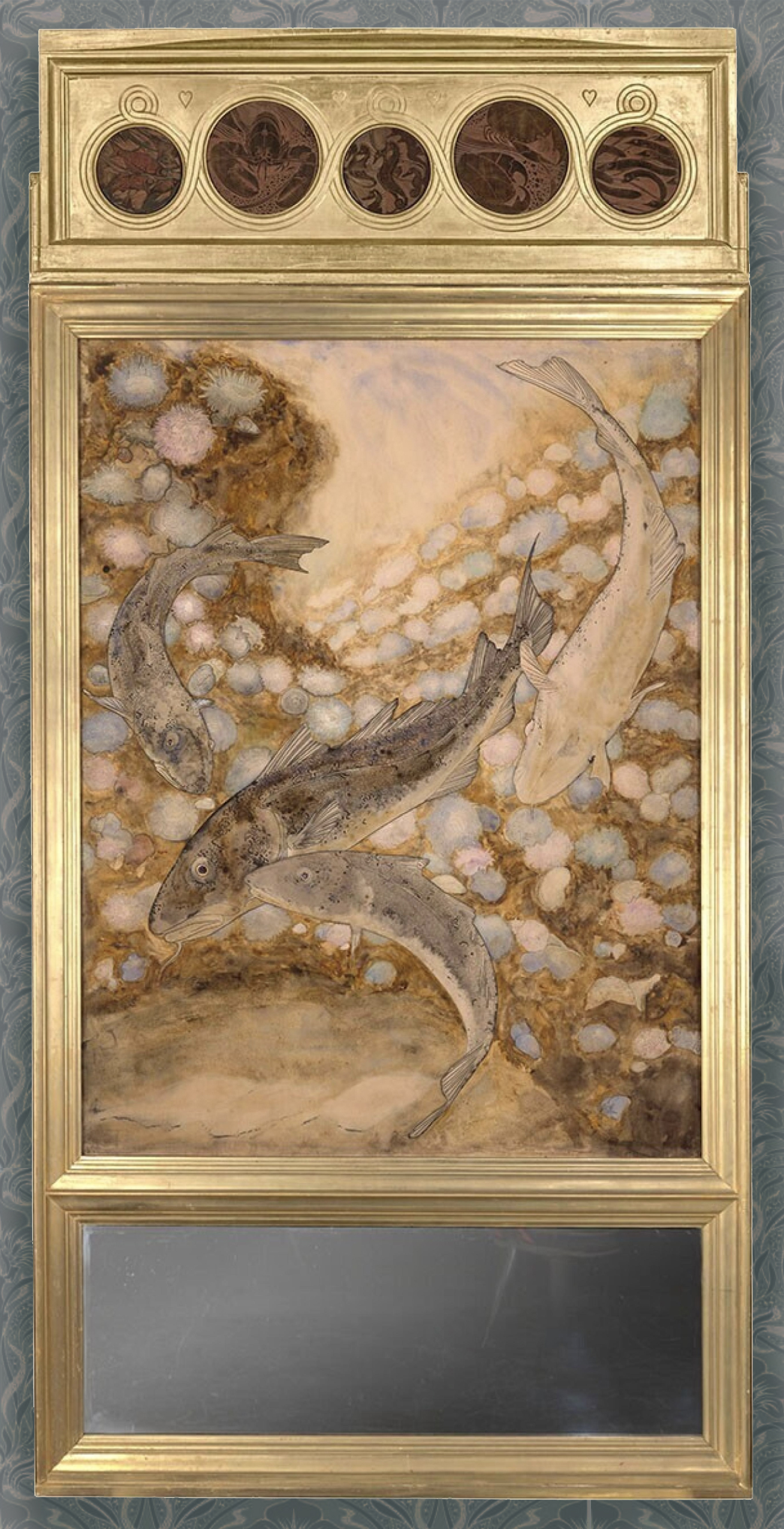
Gerrit Willem Dijsselhof (1866-1924), giltwood overmantel with Fish in a pool of sea anemones, watercolour, below decorative carved panel, and above a pane of mirrored glass, 1892, 250 x 120.5 x 7 cm., Museum Boijmans van Beuningen
Near the end of the timeline, we arrive at my favourite style of frame: the Art Nouveau – flamboyant as well as geometric, and also spectacular artists’ frames. There the historical panorama ends, because in the 20th century Modernists decided that frames were merely optional.
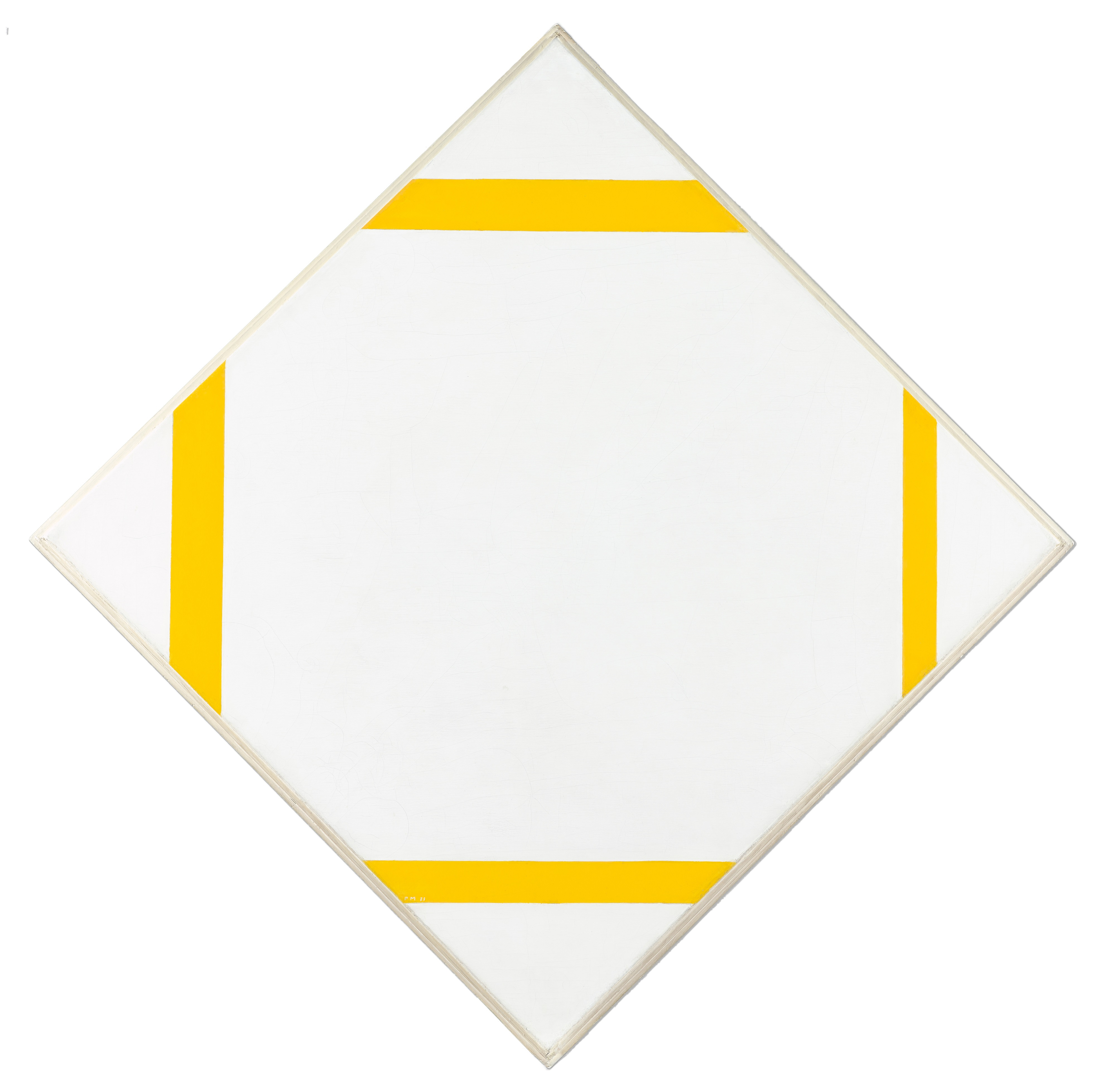
Piet Mondriaan (1872-1944), Composition with yellow lines, 1933, o/c, 80.2 x 79.9 cm., Kunstmuseum, Den Haag
Sometimes an artist would still add four slats around the canvas for protection, as Piet Mondriaan did, for instance with his Compositie met gele lijnen (Composition with yellow lines), but more often, there was no frame at all.
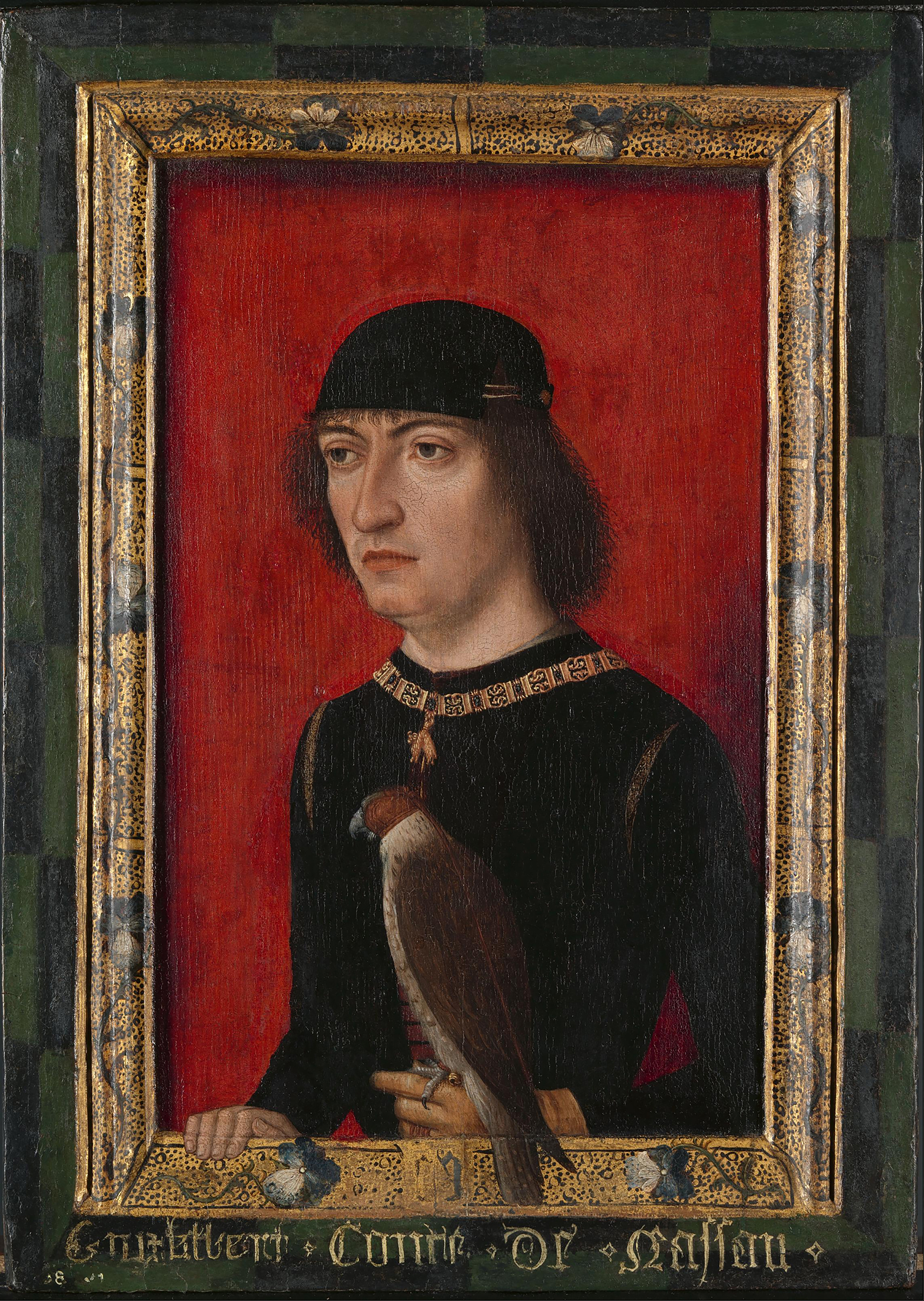
Master of the Princely Portraits (1451-1504), Engelbert II, Count of Nassau, 1487, o/panel, 33.5 x 24 cm. including integral frame, Rijksmuseum
After this overview of styles, the second and larger part of the book examines specific groups of frames with a common theme, and in more detail. These include trompe-l’oeil frames, styles with with particular profiles, frames which were replaced by a new owner with a different style, artists’ frames, fashionable frames and frames with a symbolic meaning. Of course, the examples of trompe-l’oeil – like the one above – are fascinating, and it was very interesting to read about the other groups as well. But my favourite part of the whole book is, without a doubt, the chapter on artists’ frames. From the mid-19th century into the 20th century, a number of artists had very strong ideas about how their paintings ought to be framed, and some of them designed – or even made – their frames themselves.
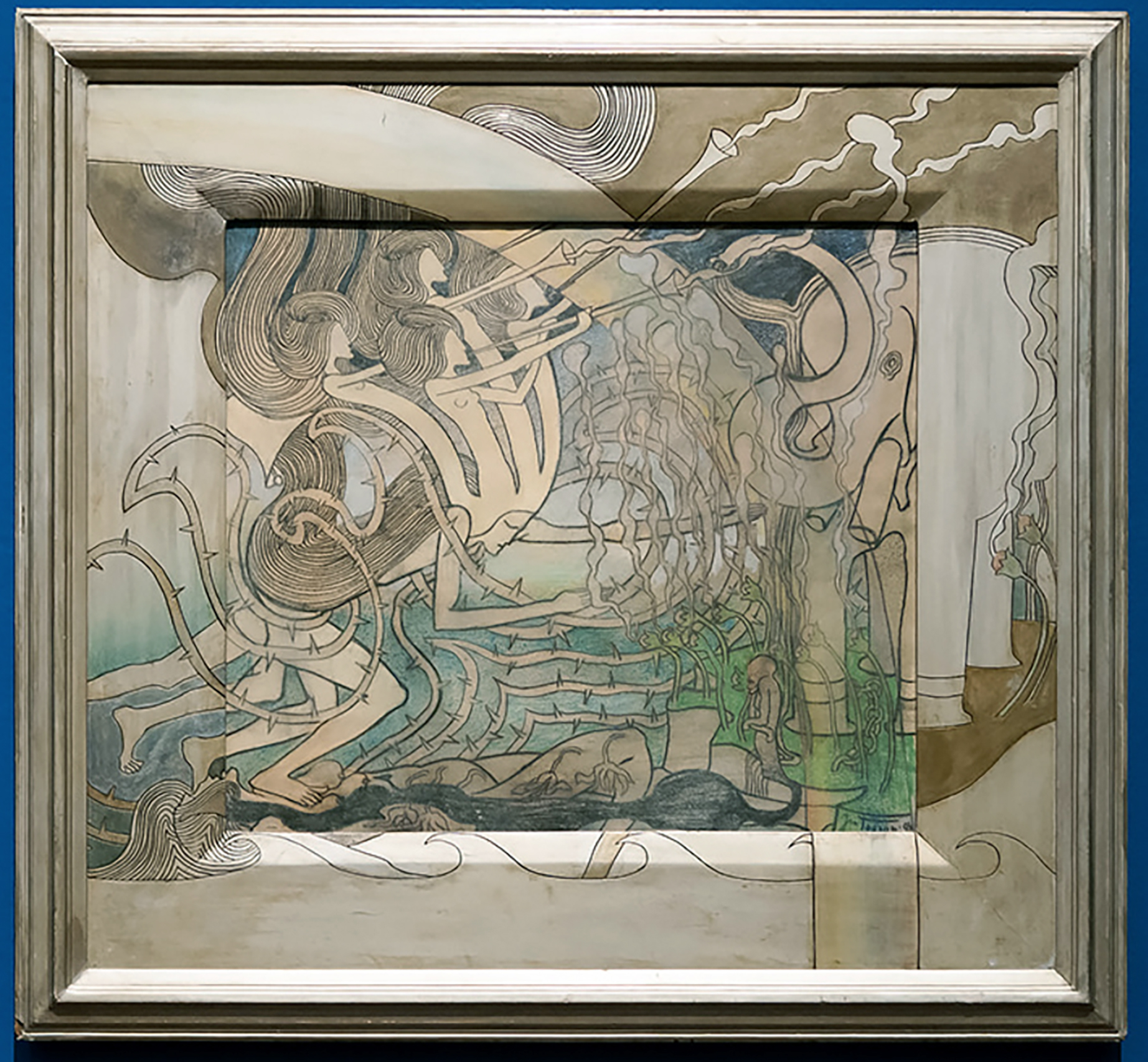
Jan Toorop (1858-1928), Lijnenspel de komst van de nieuwe kunst, 1893, chalks, coloured pencils, pastels, 42 x 47.3 cm., Kunstmuseum, Den Haag
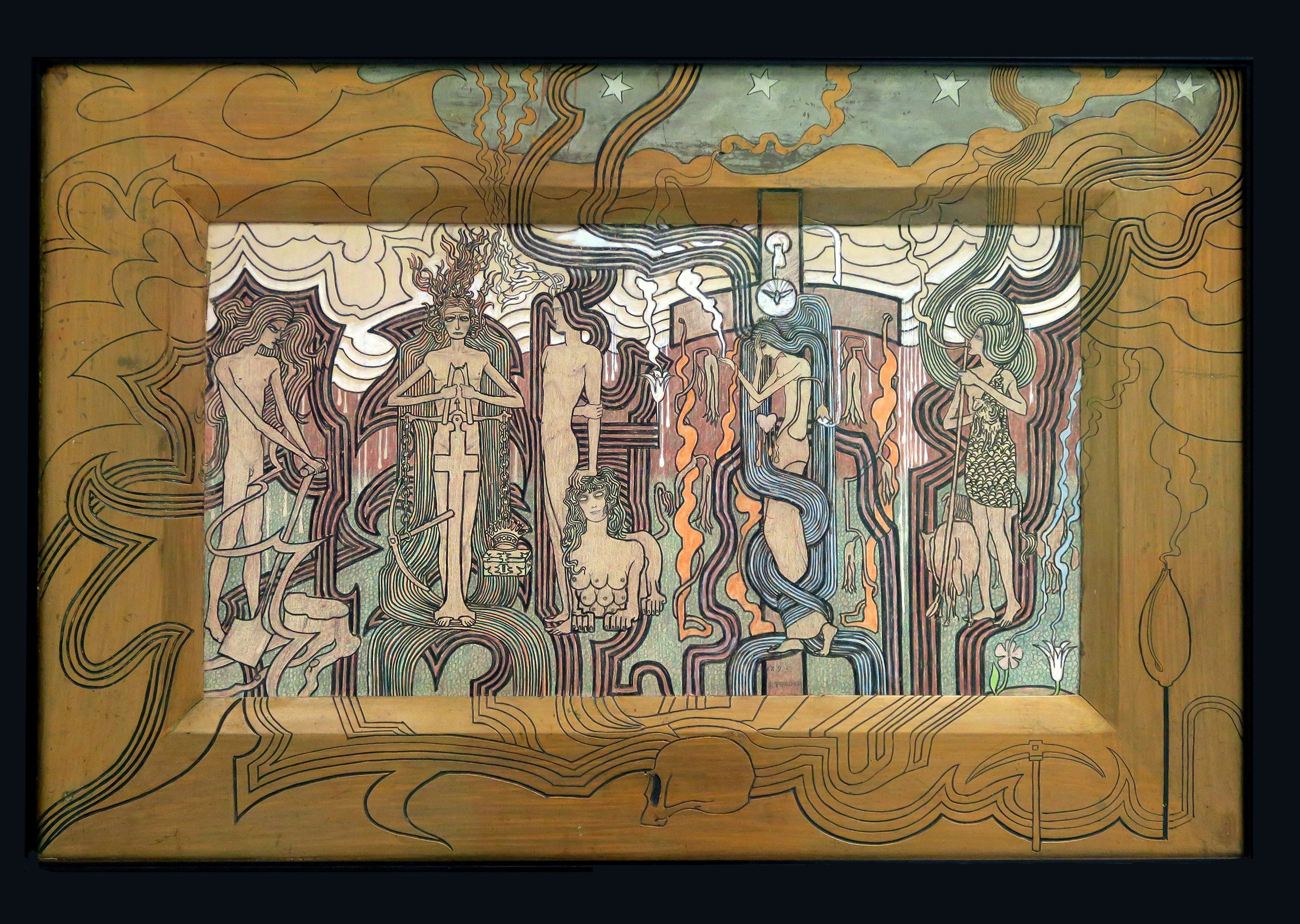
Jan Toorop (1858-1928), Zang der tijden (The song of the times), 1893, chalk and pencil on cardboard, 32 x 58.5 cm., Kröller-Möller Museum
Maarten chose to highlight some really spectacular examples – for instance, the frames Jan Toorop designed for his paintings Lijnenspel (Lineplay) and Zang der tijden (Song of our time). Toorop worked together with the framemaker Martin Joosstens for several years, even painting his portrait.
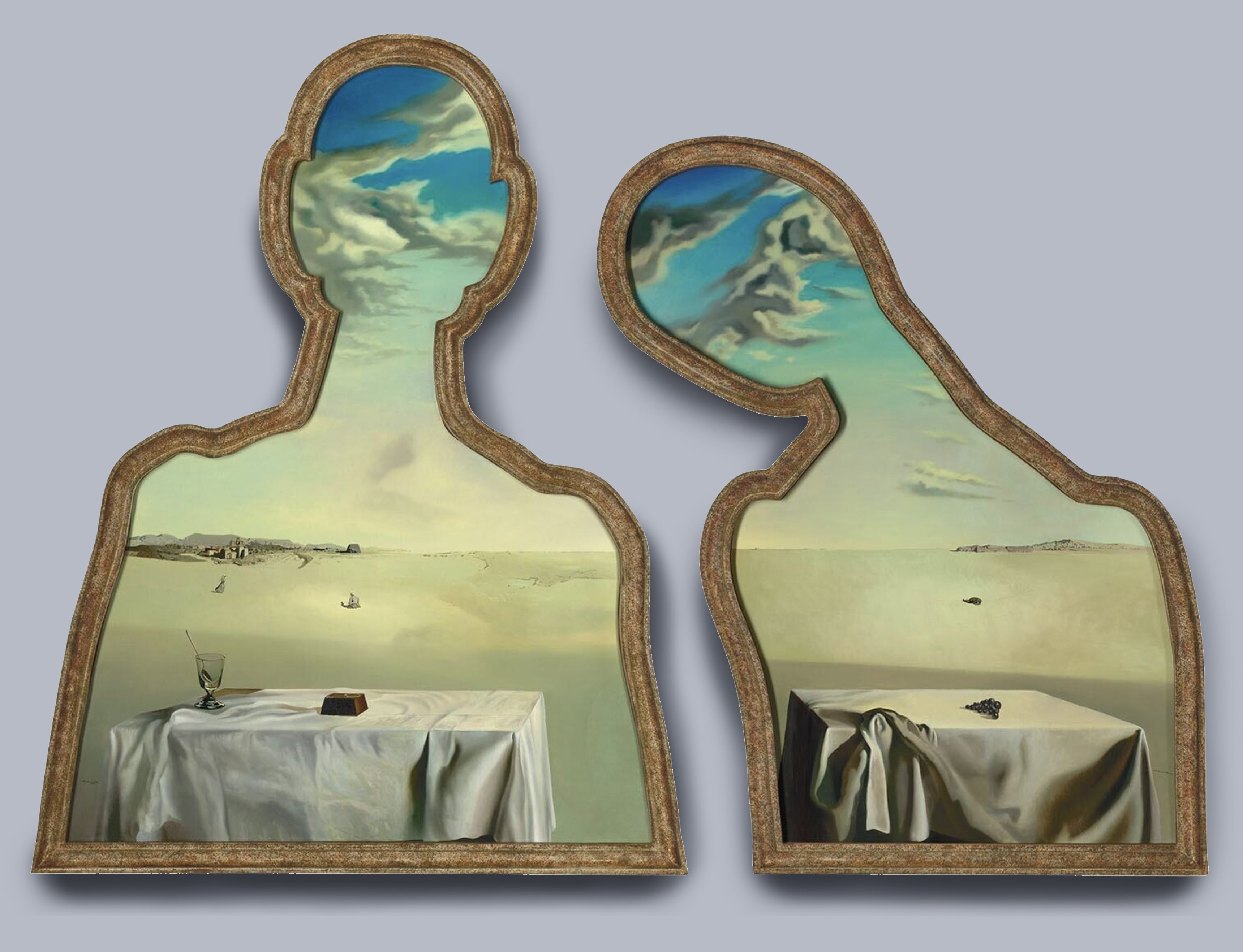
Salvador Dalí (1904-89), Couple with their heads full of clouds, 1936, o/panel, 98.5 x 156.4 cm., Museum Boijmans van Beuningen, Rotterdam
And what are we to think of the frames Salvador Dalí designed for his Couple aux têtes pleines de nuages (A couple with their heads full of clouds)? Here, the frames are actually drawing the outlines of the paintings.
If, like me, you don’t have a background as an art historian, this book is incredibly helpful for trying to understand the context of a painting – almost as if you are given the secret code to decipher a mysterious hidden language. It’s a book which definitely fills a gap in the information in museums and at exhibitions; after all, how often have you seen any mention of the frames in a gallery caption? I can only remember seeing such a thing when an artist’s frame was concerned.
At the end of the book, there is also a glossary of the technical terms used throughout the text, which is indispensable, if you’re not an art historian. The only negative aspect to Omkaderd is that at the moment it is only available in Dutch; other than that, I found the book exceptionally insightful and definitely worth reading.
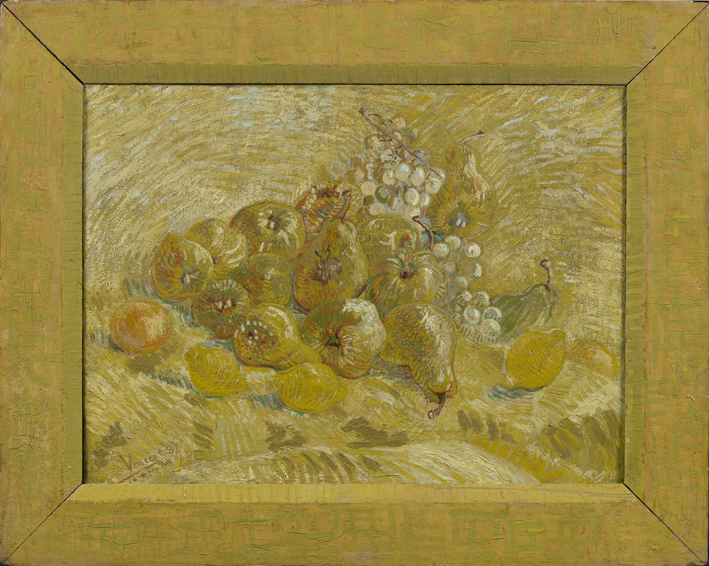
Van Gogh (1853-90), Still life with grapes, pears and lemons, 1887, o/c, 48.9 x 65.5 cm., Van Gogh Museum
************************************
Een boekbespreking van Omkaderd door Hubert Baija
Maarten van ’t Klooster, Omkaderd | Bijzondere lijsten in de Lage Landen (Framed | Special frames in the Low Countries), uitgever: WBooks, Zwolle, publicatiejaar 2025, ISBN 978 94 625 8672 7, pg. 160, afbeeldingen in kleur en zwart-wit, €34.95
Omkaderd is een nieuw boek over schilderijlijsten door de Nederlandse kunsthistoricus Maarten van ’t Klooster, dat in 2025 verscheen. In zijn inleiding spreekt de auteur de wens uit dat de lezer, gewapend,
‘…met nieuwe kennis, geen museum meer kan bezoeken zonder ook naar de lijsten te kijken.’
Als ervaren lijstenprofessional bespreek ik hier met plezier dit boek. De volledige titel Omkaderd – bijzondere lijsten in de Lage Landen. Dit laat zich ruwweg vertalen als Omkaderd – bijzondere lijsten in de Lage Landen. Het ietwat archaïsche Nederlandse woord omkaderd beschrijft het onderwerp op een betere manier dan lijst, want dat naast lijst diverse andere betekenissen, zoals in boodschappenlijst of verlanglijstje.
David Oyens (1842-1902), De lijstenmaker aan het werk (?Felix Mommens), 1871, Teylers Museum, Haarlem
Deze publicatie is een echte eye-opener voor beginnende kunstliefhebbers. De besproken kunstwerken zijn fysiek verspreid, van Groningen tot Antwerpen en van Enschede tot Amsterdam. Op de voorkant van het boek staat een negentiende-eeuwse lijstenmaker die zich concentreert op zijn delicate werk, waardoor de lezer wordt meegenomen vanuit de hectiek van de digitale wereld naar de rustige analoge momenten waar veel museumbezoekers aan toe zijn.
Omkaderd heeft een onmiskenbare charme doordat de belangrijkste informatie in beknopte en zeer heldere hoofdstukken wordt gepresenteerd. De analyse van meer complexe onderwerpen, zoals wat ‘een originele lijst’ betekent, wat ‘de originele lijst’ van een schilderij is, of meer technische aspecten, wordt grotendeels vermeden. Daarmee lijkt de auteur ervoor te zorgen dat beginners niet afgeschrikt worden door eindeloze details of vergezochte speculaties. Terecht. De lezers worden op een goede educatieve manier meegenomen door een wonderlijke wereld van schilderijlijsten.
Hans Memling (c.1433-94), Portret van een jonge vrouw of Sibylla Sambetha, 1480, paneel, 38 x 26.5 cm., 46.6 x 35.2 cm., Sint-Janshospitaal, Bruges
De geografische aanduiding Lage Landen in de titel suggereert de culturele en historische overeenkomsten tussen Nederland en België. Dit wekt de verwachting van een evenwichtige verdeling van kunstvoorwerpen uit beide landen; er zijn echter slechts zes van de eenenvijftig beschrijvingen van werken in Belgische musea. Deze onevenwichtigheid zou in de toekomst wellicht gecorrigeerd kunnen worden door toepasselijke entries toe te voegen aan het hoofdgedeelte van het boek of door de titel aan te passen.
Een overzicht van dertien pagina’s over de geschiedenis van lijsten helpt de lezers zich te oriënteren in de verschillende stijlperioden. De nomenclatuur voor lijsten is nog niet volledig vastgelegd of wordt nog niet consequent gehanteerd in dit beroepsveld, maar dit valt buiten het bestek van dit boek [2]. Na de inleiding over lijstengeschiedenis volgt het hoofdgedeelte met inzichtelijke beschrijvingen van geselecteerde voorbeelden van schilderijen en hun lijsten. Een waardevolle verklarende woordenlijst en een overzicht van referentieliteratuur en websites over lijsten sluiten het boek af. Op dit moment is er nog geen alfabetische index.
Meer dan honderd pagina’s entries vormen een denkbeeldig museum, waarin voorbeelden van ingelijste schilderijen uit verschillende collecties denkbeeldig worden samengebracht. Hoewel de criteria voor opname in het boek intuïtief zijn, is het resultaat zeer aantrekkelijk. De beschrijvingen zijn vlot geschreven achtergrondverhalen en historische perspectieven en bieden tevens inzichten in verfijningen qua ontwerp. De titels van de entries hebben vrijwel zonder uitzondering een intrigerende en vaak humoristische toon die de nieuwsgierigheid aanwakkert om verder te lezen. Het lettertype is groot en gemakkelijk leesbaar en de illustraties zijn uitmuntend en bovendien groot genoeg om te bestuderen.
Frans van Cuyck de Myerhop (c.1640-89), Stilleven met vogels, 1670s, o/c, 120 x 93 cm., Groeningemuseum, Bruges
De beschreven kunstvoorwerpen zijn gegroepeerd onder zes hoofdstukken. Om diversiteit te illustreren geef ik hier een samenvatting van kunstenaars die in de zes hoofdstukken aan bod komen:
- Trompe-l’oeil, met werken van Hans Memling, de Meester van de Prinsenportretten, Joos van Cleve, Frans van Cuyck de Myerhop en anonieme kunstenaars.
Pieter Pietersz I (c.1540/41-1603), Maria Magdalena in gebed, 1575>, 82 x 69.5 cm., Catharijneconvent, Utrecht
- Profiellijsten, met werken van Pieter (I) Pietersz, Jacob Fransz van der Merck, Hendrick Goltziusen anonieme kunstenaars.
- Nieuwe eigenaar, nieuwe lijst, met werken van Jean Clouet, Peter Paul Rubens, Lucas van Leyden, Jan Asselijn, Wilhelm Johann Martens, Gottfried Kneller en Vincent van Gogh.
- Kunstnaarslijsten, met werken van Pierre Puvis de Chavannes, Frans Post, Odilon Redon, Jan Toorop, Arthur Segal, Salvador Dali, Gerrit Willem Dijsselhof, Laurens Alma Tadema, Georges Vantongerloo en Piet Mondriaan.
Hermannus Collenius (1650-1723), Portrait of Onno Tamminga Alberda van Rensuma, 1710-15, 108 x 88 cm., Groninger Museum/ Menkemaborg, Uithuizen
- In de mode, met werk van onder anderen Bicci di Lorenzo, Jacopo di Casentino, Neri di Bicci, Gerard ter Borch, Derck Daniels, Philip van Dijk, Jan de Baen, Alexander Roslin, Jan Stolker, Hermannus Collenius, Jean Mone, Jacob van Campen, Jean-François Millet en anonieme kunstenaars.
Jan Provoost (c.1464-1529), Drieluik met Maria met kind, Johannes de Evangelist en Maria Magdalena, c.1520-25, paneel, 44 x 30.5 cm., Mauritshuis
- Een extra betekenis, met werk van Jan Provoost, Jan Mijtens, Caspar Peeter II Verbruggen, Pseudo-Bles, Hendrick ter Brugghen, Jan Gossart en Benedetto Buglioni.
Ik plaats het lijstenboek van Maarten van ‘t Klooster hier kort in een kleine internationale context van verwante publicaties door het te vergelijken met twee publicaties die zich eveneens richten op het algemene museumpubliek in plaats van een gespecialiseerd wetenschappelijk publiek.
Nicholas Penny, voormalig directeur van de National Gallery in Londen, schreef een bijzonder handige gids over schilderijlijsten, getiteld A Closer Look at Frames. Deze gids, oorspronkelijk gepubliceerd in 2010 onder de titel Pocket Guides: Frames, belicht lijsten in de National Gallery in Londen. W.H. Bailey, een Amerikaanse kunstenaar en voormalig hoogleraar kunstgeschiedenis aan de Yale University, schreef Defining Edges in 2002. Het boek heeft een vergelijkbare opzet als die van Van ‘t Klooster, maar met een ander en iets meer speculatief perspectief. Ook begint kunsthistoricus Van ‘t Klooster zijn boek met De geschiedenis van de lijst tot het begin van de twintigste eeuw, terwijl Bailey, bovenal een kunstenaar, begint met Het verhaal van de schilderijlijst. De helft van Baileys entries gaat over de twintigste eeuw, terwijl de meeste beschrijvingen van Van ‘t Klooster voorbeelden zijn van vóór de twintigste eeuw.
Joos van Cleve (attrib.; c.1485-1540/41), Portret van een onbekende man; Portret van een onbekende vrouw, beide c.1515, paneel; beide 40 x 28 cm., Rijksmuseum Twenthe, Enschede
De fraaie publicatie van Maarten van ‘t Klooster zal zonder twijfel de ervaringen van vele kunstliefhebbers in musea en thuis verrijken door het bekijken van de geïllustreerde pagina’s. Deze gebonden uitgave biedt vele prachtige voorbeelden van ingelijste schilderijen. Het boek blinkt vooral uit door de didactische inhoud, maar ook door zijn fysieke aantrekkingskracht. Het formaat biedt ruimte voor grotere illustraties en een groter lettertype, waardoor het gemakkelijker te lezen is bij weinig licht dan vergelijkbare boeken. Het boek ligt prettig in de hand en de aangename half-matte afwerking voorkomt vingerafdrukken op de pagina’s en de omslag. En niet te vergeten: dit boek is niet te zwaar om mee te brengen tijdens museumbezoeken.
Lucas van Leyden (1494-1533),Verering van het gouden kalf, c.1530, paneel, 91.7 x 30.2, 93.5 x 66.9, and 91.8 x 30.2 cm., Rijksmuseum SK-A-3841
Voor de velen van ons die graag schilderijen bekijken, is dit nieuwe boek een geweldige hulp om ons perspectief te verbreden. Omkaderd zal veel mensen inspireren om schilderijen die ze al kennen nog eens beter te bekijken, of zelfs om nieuwe locaties toe te voegen aan hun museumplannen om nieuwe schilderijen met hun lijsten te bewonderen. Moge dit boek zoveel mogelijk mensen bereiken via boekhandels, cadeauwinkels en kunstmusea. Hoewel het in het Nederlands is geschreven, verdient het ruime beschikbaarheid voor een breder publiek van kunstliefhebbers.
************************************
Een boekbespreking van Omkaderd door Olga Harmsen
Tijdens een bezoek aan een museum of kunstbeurs betrap ik mezelf er vaak op dat ik denk: ‘Ik vind de lijst mooier dan het kunstwerk erin’. Ik geef op veilingen ook vaker geld uit aan lege lijsten dan aan schilderijen. Ik denk dat ik meer een liefhebber ben van ‘decoratieve kunst’ dan van ‘schone kunst’ – en ik ben vooral dol op lijsten uit de periode 1890-1915. Je kunt je voorstellen hoe blij ik was toen in 2015 een tentoonstelling over lijsten werd aangekondigd in mijn plaatselijke museum (Van de kunst en de rand, de lijst centraal) – een prachtig initiatief van het Dordrechts Museum. Maar die tentoonstelling was te klein wat mij betreft; ik wilde meer over lijsten leren, veel meer.
Het nieuwe boek Omkaderd van Maarten van ‘t Klooster past dan ook precies in mijn straatje. Het is niet geschreven voor kunsthistorici; het doel van dit boek is om de leek bewust te maken van lijsten en hun betekenis. Na het lezen van dit boek zal de lezer geen museum meer kunnen bezoeken zonder de lijsten op te merken. En ‘gewapend met nieuwe kennis’ zoals het boek zelf zegt, zal hij of zij in staat zijn om die lijsten op de juiste manier te interpreteren.
Het boek is thematisch ingedeeld. Het is geen lijst van de meest waardevolle lijsten aller tijden, en het pretendeert ook niet compleet te zijn. Het is eerder een overzicht van de geschiedenis van lijst-stijlen. En het belicht bovendien enkele zeer bijzondere lijsten uit de 15e tot begin 20e eeuw uit Nederland en Vlaanderen.
Antonio Rossellino (cirkel van; 1427-1479), Madonna die het Christuskind aanbidt, na 1427, terracotta met polychrome lijst, 105 cm. diameter, en 120 cm. diameter inclusief lijst, Rijksmuseum
In eerste instantie vroeg ik me af waarom het boek met de 15e eeuw begon, en niet eerder. Dat is eigenlijk een interessante vraag; ik had het me nooit gerealiseerd, maar, zoals Maarten uitlegt, werden er vóór de 15e eeuw slechts weinig draagbarelijsten gemaakt. Vroegchristelijke kunst bestond voornamelijk uit mozaïeken, romaanse kunst (1000-1150) voornamelijk uit fresco’s, en geen van beiden werd in de moderne zin ingelijst. Heilige gotische schilderijen, van ongeveer 1100-1500, werden verwerkt in altaarstukken – architectonische constructies die ontworpen waren in dezelfde stijl als de kerken waarin ze zich bevonden. Pas tijdens de Renaissance (1450-1600) zien we op zichzelf staande tondi, oftewel ronde lijsten, en draagbare rechthoekige cassetta (kleine doosvormige lijst) met een binnen- en buitenlijst, gescheiden door een centraal vlak paneel of fries.
In het eerste deel van het boek worden alle historische lijst-stijlen kort aangestipt: Gotiek, Renaissance, Sansovino, de cassetta; en vervolgens de Lodewijk XIII-, Lodewijk XIV-, Lodewijk XV- en Rococo-stijlen, gevolgd door Lodewijk XVI, Empire, Biedermeier, enzovoort. Een van de meest interessante paragrafen is waarschijnlijk die over de bijzondere kwabstijl, ook wel de oorschelpstijl genoemd.
Jan Asselijn (1610-1652), De bedreigde zwaan, c.1650, olieverf op doek, 144 x 171 cm., Rijksmuseum
Ik heb me gespecialiseerd in de Art Nouveau-periode, dus deze Nederlandse variant van de Auriculaire stijl uit het midden van de 17e eeuw fascineert me altijd: het toont fantastische zeedieren, grillige anatomische vormen en vloeiende contouren, en is een soort voorloper van de Art Nouveau, zo’n tweehonderd jaar zijn tijd vooruit. Een paar maanden geleden kreeg ik de kans om de kwablijst die in Maartens boek staat afgebeeld met eigen ogen te zien. De lijst was te zien in een tentoonstelling in het eerdergenoemde Dordrechts Museum, om het schilderij De bedreigde zwaan van Jan Asselijn, ca. 1650. Een plaatje van dit schilderij hing boven mijn bed toen ik een puber was!
Maarten vervolgt zijn tijdlijn door de 19e eeuw en legt uit dat tijdens de zogenaamde ‘lelijke periode’ aan het einde van de 19e eeuw, toen eclecticisme in de mode was, alle voorgaande stijlen werden gekopieerd en meestal en masse geproduceerd. Dit betekende dat decoratieve motieven niet langer met de hand in de houten structuur van de lijsten werden gesneden. Ze werden nu gevormd uit gips (een pasta van krijt en lijm) en op de kale houten lijsten geplakt. Deze techniek was snel en goedkoop, maar het maakte de lijsten veel kwetsbaarder, wat tegenwoordig resulteert in het grote aantal beschadigde lijsten dat op veilingen wordt aangeboden.
Gerrit Willem Dijsselhof (1866-1924), verguld houten schoorsteenstuk met Vissen in een poel met zeeanemonen, aquarel, onder een decoratief gesneden paneel en boven een ruit van spiegelglas, 1892, 250 x 120.5 x 7 cm., Museum Boijmans van Beuningen
Tegen het einde van de tijdlijn komen we aan bij mijn favoriete stijl van lijsten: de Art Nouveau – zowel flamboyante als geometrische Art Nouveau, en spectaculaire kunstenaarslijsten. En daar eindigt het historische overzicht, want in de 20e eeuw besloten modernisten dat lijsten slechts optioneel waren.
Piet Mondriaan (1872-1944), Compositie met gele lijnen, 1933, olieverf op doek, 80.2 x 79.9 cm., Kunstmuseum Den Haag
Soms voegde een kunstenaar nog vier latten rond het doek toe ter bescherming, zoals Piet Mondriaan bijvoorbeeld deed bij zijn Compositie met gele lijnen, maar vaker was er helemaal geen lijst.
Meester van de Vorstelijke Portretten (1451-1504), Engelbert II, Graaf van Nassau, 1487, olieverf op paneel, 33.5 x 24 cm., inclusief lijst, Rijksmuseum
Na dit overzicht van stijlen behandelt het tweede en voornaamste deel van het boek specifieke categoriën lijsten in meer detail, elk met een gemeenschappelijk thema. Zoals trompe-l’oeil lijsten, lijsten met bijzondere profielen, lijsten die door een nieuwe eigenaar met een andere smaak werden vervangen, kunstenaarslijsten, modieuze lijsten en lijsten met een symbolische betekenis. De voorbeelden van trompe-l’oeil – zoals de bovenstaande – zijn natuurlijk fascinerend, en het was ook erg interessant om over de andere categoriën te lezen. Maar mijn meest favoriete deel van het hele boek is zonder twijfel het hoofdstuk over de kunstenaarslijsten. Vanaf het midden van de 19e eeuw tot in de 20e eeuw had een aantal kunstenaars zeer uitgesproken ideeën over hoe hun schilderijen ingelijst moesten worden. En sommigen ontwierpen – of maakten – hun lijsten daarom zelf.
Jan Toorop (1858-1928), Lijnenspel, de komst van de nieuwe kunst, 1893, krijt, kleurpotloden, pastelkrijt, 42 x 47.3 cm., Kunstmuseum, Den Haag
Jan Toorop (1858-1928), Zang der tijden (The song of the times), 1893, krijt en potlood op karton, 32 x 58.5 cm., Kröller-Möller Museum
Maarten koos er voor om een aantal werkelijk spectaculaire voorbeelden uit te lichten – bijvoorbeeld de lijsten die Jan Toorop ontwierp voor zijn schilderijen Lijnenspel en Zang der tijden. Toorop werkte jarenlang samen met zijn lijstenmaker Martin Joosstens en schilderde zelfs diens portret.
Salvador Dalí (1904-1989), Paar met het hoofd vol wolken, 1936, olieverf op paneel, 98.5 x 156.4 cm., Museum Boijmans van Beuningen, Rotterdam
En wat te denken van de lijsten die Salvador Dalí ontwierp voor zijn Paar met het hoofd vol wolken? Hier omlijnen de lijsten als het ware de contouren van de schilderijen.
Als je, net als ik, geen achtergrond hebt als kunsthistoricus, is dit boek ontzettend nuttig om de context van een schilderij beter te begrijpen – bijna alsof je de geheime code krijgt waarmee je een mysterieuze geheimtaal kunt ontcijferen. Het is een boek dat absoluut een leemte opvult in de informatie van musea bij tentoonstellingen; hoe vaak zie je immers een vermelding van de lijsten in een tentoonstellingstekst? Ik kan me alleen herinneren dat ik ooit zoiets las, toen het over de lijst van een kunstenaar ging.
Aan het eind van het boek bevindt zich ook een verklarende woordenlijst met de technische termen die in de tekst gebruikt worden; onmisbaar als je geen kunsthistoricus bent. Het enige minpuntje aan Omkaderd is dat het momenteel alleen in het Nederlands verkrijgbaar is; afgezien daarvan vond ik het boek buitengewoon inzichtelijk en absoluut de moeite van het lezen waard.
Van Gogh (1853-1890), Stilleven met druiven, peren en citroenen, 1887, olieverf op doek, 48.9 x 65.5 cm., Van Gogh Museum
************************************
Maarten van ‘Klooster is curator at the Municipal Museum of Vianen. He has maintained a keen interest in picture frames since an internship at the Rijksmuseum Amsterdam, and has contributed articles to The Frame Blog: a review of the 2018 exhibition ‘Kwab: the Auricular in Amsterdam‘ , and an article on the small aedicules reused for 16th century court portraits, ‘Corneille de Lyon: French portraits, Venetian frames, Islamic ornament‘ .
Hij is conservator bij het Stedelijk Museum Vianen. Hij heeft sinds zijn stage bij het Rijksmuseum Amsterdam steeds belangstelling gehouden voor schilderijlijsten. Hij draagt ook regelmatig bij aan The Frame Blog.
Hubert Baija is the former senior conservator of frames and gilding, and researcher in the history of picture framing, at the Rijksmuseum, Amsterdam, and the former senior survey specialist and project manager at the Art Gallery of Ontario. He is a lecturer at Beloit College, Wisconsin, and consultant on historic picture frames.
Olga Harmsen specializes in the Art Nouveau movement, and is the author of Blog About Art Nouveau . In 2019, she received a Special Mention of the Jury at the European Heritage Awards/Europa Nostra Awards. She is also a period decorator of Art Nouveau interiors and architecture: through her company, Maison l’Art Nouveau, she advises owners when restoring a property in that style, and supplies them with the correct materials of the period.
************************************
[1] For example, the description of 19th century Impressionist frames still remains confusing, especially in auction/sale catalogues
[2] De naamgeving van bijvoorbeeld 19e-eeuwse lijsten uit de periode van het impressionisme blijft nog verwarrend, in het bijzonder in veiling-/verkoopcatalogi
 The Frame Blog